Game Marketing Tips, Analysis, and News


Showing posts with label adventure game marketing. Show all posts

Wednesday, August 31, 2011

A New Console

A new console contender? If you live in India...
There's a new console being planned, by a startup called Zeebo, but its focus is not on games, it's on education.. They've been around since 2007, and initially their aim was to get consoles into developing countries like Brazil and Mexico, where they introduced the Zeebo in 2009. The unit plugs right into a TV set, and accessed the Internet wirelessly via 3G (which is also how software titles were distributed). Apparently Zeebo didn't go over well enough in those countries, for they are refocusing their efforts on India as well as other emerging markets. Current Zeebo operations in Brazil and Mexico are shutting down as of the end of September, and the devices will no longer be able to connect to the Internet.

Zeebo is planning on a new version to be introduced in 2012, and reducing the emphasis on gaming. It's an interesting vision, trying to bring Internet connectivity, software sales, education and gaming to a wide audience in the emerging world. I'm not sure how successful this will be, since they've already tried in Brazil and Mexico without sufficient success to continue. Much will depend on the pricing, and on the sort of content they can get onto their system.

I'm dubious that they can reach a sufficient scale to be a big success, though. I think their vision of inexpensive Internet access will be realized by the spread of smartphones to emerging markets. The size and amazing growth of the smartphone market can drive hardware prices low enough to be possibly affordable in emerging markets, especially since the devices are small and don't use much power. Solar charging becomes quite possible. Tablets will follow along as screen prices continue to drop. Distribution will take place digitally, thereby avoiding all the problems of retail stores and getting physical goods shipped in a country with a poor road system.

The result will be a huge market emerging for games that never existed before, if you can make your games accessible in a variety of languages. Many games need very few words to be playable, and these will be the ones that make their way quickly to new markets. There are many implications in the spread of this technology, and astute marketers should begin to think about how to bring their games to emerging markets.

Wednesday, August 17, 2011

Notch Calls Out Bethesda

Wait, could these have a copyright problem?
Trademark disputes are nothing new in the game business, I remember doing battle with Marvel over the trademark to Champions in the early 1980's. (We won, by the way, though it cost us a fair amount of money.) What may be changing is the method of resolution. Seems that Bethesda got a bit antsy over Mojang's looking to trademark the word "Scrolls", and fired off a legal letter.

Here's Notch's response (Notch is the handle of Markus Persson, creator of Minecraft and Mojang):


I challenge Bethesda to a game of Quake 3. Three of our best warriors against three of your best warriors. We select one level, you select the other, we randomize the order. 20 minute matches, highest total frag count per team across both levels wins.
If we win, you drop the lawsuit.
If you win, we will change the name of Scrolls to something you’re fine with.
Regardless of the outcome, we could still have a small text somewhere saying our game is not related to your game series in any way, if you wish.

Oh, I do wish Bethesda would take him up on this... but sadly, I suspect they won't.

Monday, August 8, 2011

Japanese Game Companies See Kuro & Aka

Japanese game companies have been struggling with the transitions in the game market; see Nintendo for a prime example. Not all the Japanese companies have been seeing aka (red) in their results; some have been getting nice kuro (black) ink.

Here's a company that's making some serious money from casual games.
Let's check in with Square Enix... they've been struggling with release dates and poor reviews of their latest Final Fantasy games. Their first fiscal quarter ended June 30, and they're reporting sales of $314.9 million with income of $8.8 million. Sales are down 25% over last year, and profits are down 62%. Lack of major releases was the big reason, while they struggle to get their development back on track. The only bright spots they cite are  “robust growth” in its online sim title Sengoku Ixa and its online community site Nicotto Town.

Meanwhile, Konami's been on a roll. Their first quarter was $705.9 million, up a few percent from last year, but profits more than tripled (to $52 million from $16.3 million last year). Was it some big software sales and hot new releases? Quite the opposite; their software sales were only 2.76 million units, down from 4.63 million last year. So what did the trick? Here's what IndustryGamers.com said:

Konami’s mobile freemium offerings like Dragon Collection, Sengoku Collection, and Professional Baseball Dream Nine were a huge success for the division and made up for the lack of premium titles in the console space.  The titles accounted for a total of 5.5 million registered players for Konami’s mobile games and the publisher will be pushing more properties over into the social space over the coming year.


Freemium games made a huge amount of money for Konami. Not surprisingly, they're planning on doing more of them. It seems pretty obvious that it's the business model of the future, and the way to expand the audience. It doesn't mean you have to stop making software for consoles that's sold in retail stores, but it certainly should affect how you allocate your development resources. We can only hope that Nintendo is learning something from these earnings reports.

Thursday, June 23, 2011

PopCap Games Being Acquired... By Who?

Time to pop a cork, not just a cap, when you sell your company for over $1 billion.
Word is coming from TechCrunch that PopCap Games, makers of such hit games as Bejeweled and Plants Vs. Zombies, is being acquired, with the purchase price rumored to be north of $1 billion dollars. The big question is, who's the lucky (and wealthy!) buyer? There's no shortage of suspects, but one name that springs to mind right away, Zynga, is not in fact the buyer. Though Zynga did look closely at PopCap, in the end they decided the price tag was a little too much for them. PopCap's revenues are said to be in the range of $100 to $150 million annually, which puts the purchase price well over a 10x multiple... which is very pricey as these sorts of deals go (a 3x multiple is considered a standard valuation).

If Zynga's not the buyer, who does that leave? Well, there's... EA, who's certainly not averse to growing by acquisition. But that purchase price is a significant chunk of their $7.9 billion valuation. So it may be too rich for them... then again, they've been eyeing Take 2, so they are not opposed to spending a lot on an acquisition if they think it's a worthwhile strategic move. I'm not sure that PopCap is worthy of such a healthy valuation, though.

Activision, of course, could really use some diversification... they are basically nowhere in casual, social, or mobile gaming, which are the high-growth areas of the industry (traditional games being in negative growth for the past three years). Or perhaps an Asian company like TenCent wants to get into the Western market in a bigger way.

I expect the answers to be revealed over the next week or so. It'll be interesting to see who shows up as the mystery buyer.

Thursday, June 2, 2011

Smartphones Converge With Set-top Boxes

Wireless HD video from your smartphone to your TV... made to order for gaming.
It's pretty clear that smartphone technology is heading for our family rooms, and a new technology announced by Qualcomm will help make it happen. Qualcomm's got a tri-band chip that will offer dual-band WiFi, Bluetooth, and 60 GHz wireless  video transfer for speedy HD video. So you won't need to hook your tablet or your smartphone up to your TV with a cable; you'll be able to shoot video right to your HDTV.

Sure, you can play videos you happen to have on your smartphone... but really, the benefit of this technology will be playing your smartphone or tablet game on your big screen. Your controller is also your game machine... and at the rate the mobile video tech is advancing, these game machines in smartphone clothing will be surpassing current consoles soon.

If you thought the possibility for disruption of the current console market depended on Apple or Google or others producing dedicated boxes for the family room, think again. The capacity to destroy the current console market could be built into every tablet and smartphone in a year or two. Keep an eye on what's announced at E3, and see if any of it will in any way be a useful response to this apocalyptic technology. I'm betting it won't be...

Tuesday, May 10, 2011

How Not To Advertise

An ad from Popular Mechanics.
This is not a game ad, but it serves to illustrate some important things NOT to do when creating an ad. First of all, this ad is in a marketplace section, so it's a small size. Which means that putting a package shot in the ad, especially when the package is rather complicated and difficult to read, is a mistake. You'd be better off putting in a picture of the trimmer itself.

Second, where's the call to action? Am I supposed to buy this? Head to the web site? Look for it at a retailer (which one?) Or am I supposed to scan the QR code... assuming I have a smartphone, and know what a QR code is... which seems like a bit of a stretch. If you're going to devote a substantial part of the ad to the QR code, you might want to improve the odds of its being used by  giving me some reason to try it.

Really, though, my main beef with this ad is the content. The headline should be something that grabs my attention and makes me want to buy the item... some key feature that's so compelling I have to know more, and I want to own one. Lithium ion? Is that important in a hair trimmer? I never really thought about it... maybe the body copy will explain why I want this thing.

Three times the run time! Wait... my corded trimmer runs as long there's power coming into my house... this must be referring to a cordless trimmer. Which I may not have. Or maybe my entire body needs to be shaved regularly and I just run out of power half way through the process, it's so annoying.

Ah, but this trimmer has twice the torque! Here we get to a really fun feature. Is your hair so thick a regular trimmer just can't get through it? Who has this problem -- Sasquatch? Seriously... is there some human who has hair that defeats electric trimmer blades?

The lesson here is know your target audience; know the audience likely to be seeing this ad; and then focus in on the key features that appeal to this audience. Maybe they thought Popular Mechanics readers like power tools, and just saying Lithium Ion will make them run right out and buy this. Hey, guys, this is not a power drill or a grass trimmer (though maybe it can do that with all the torque it has). I think you're better off talking about features that might matter to a cordless trimmer buyer... maybe effectiveness, or cost, or reliability, or why it's convenient to spend more and eliminate a cord.

Don't try to sell me on features that are meaningless to this item. You'll just leave me... torqued off.

Wednesday, May 4, 2011

Can Smartphones Outplay Consoles?

An incredible amount of processing power in a tiny space, with 1 watt of consumption.
A smartphone could never compete with a console for sheer processing horsepower... could it? One startup thinks that may be possible soon... they've got a 64 core chip that doesn't take up much space (as you can see in the above comparison to Apple's A5 chip) and only chews up 1 watt at full bore. If you want to scale up to 4,096 cores, that will only cost you 64 watts... not a bad thing if you plan to put it in a set-top box (Google TV, Apple TV, are you paying attention?)

Now, you might say that a console, having much more space and being plugged into a wall socket, will always beat out a smartphone. But consider that the latest console technology is about 8 years old, and that consoles are refreshing the technology ever more slowly with each generation. While smartphones are busily upgunning their tech every year, or even faster. Suddenly a smartphone that can outrun a console doesn't seem quite as fantastic a notion.

Especially if such smartphone technology can quickly migrate to the family room, via an Apple TV or a Google TV. Not only would those companies have all the advantages they currently have over consoles (hundreds of thousands of apps, low manufacturing costs due to smartphone volume, amazing variety of apps, smooth connection to smartphones and tablets), but their graphics technology might even be better.

If that's the case, game over, man. And it can happen very swiftly indeed... perhaps while Microsoft and Sony are still deciding when to come out with a new console generation. We may already have begun the move to a post-console era...

That's without even considering what this sort of graphics revolution will mean to the smartphone business. Add in one of those pico-size projectors so you can get a big screen display, and you've got some amazing capabilities in a handhled device. The game console shrinks right into the controller and the display, all in one pocketable package. Sounds like science fiction, but we could see it in a few years. Continuous computing, on a global scale... not just gaming will feel the effects of the transformation.

Gaming On Smartphones Is Popular

Games are almost as popular as social networking.
We knew gaming was a popular activity on smartphones, but it's always nice to get your data quantified. Seems that 60% of smartphone users play games on a monthly basis. This data isn't just coming from a survey, where people might make up the answers, but from actual data on how people used their phones.

Zokem's data has Words With Friends leading the usage, with 20% of smartphone owners playing that game, and 13% playing Angry Birds. I do wonder how widespread their sample is, but it's interesting data nonetheless. I guess it's easy to see why Zynga bought Words With Friends, isn't it?

http://gigaom.com/mobile/sorry-super-mario-smartphones-are-the-new-game/

Thursday, April 21, 2011

Worst moments in videogame marketing

Nokia thought this was a cool way to introduce their price point. Not.
Here's an excellent roundup of some of the most embarrassing moments in videogame marketing. Some of the winners include Nokia's launch of the ill-fated N-gage gaming phone, the infamous Daikatana ad where John Romero proclaims he's about to make you his bitch, and the wonderful Sony ad for the PSP where they managed to set back race relations a few years. It's worth a look, so you can see what not to do when you market your games.

How do you avoid getting your product and company on a list of the Worst Marketing in years to come? You may have a clever idea, or your marketing person may think it's brilliant, but it's always good to get a reality check, especially when you hear the words "edgy" or "bold" used to describe it. Show the marketing to some outsiders... people who aren't in the business, aren't hipsters, aren't too cool for words. Like your mom, or the next-door neighbor. See what they think. Remember, not everyone who will see your marketing is going to "get" the deeper layers of nuance you think are obvious. Some will just see the surface... and if they are repelled, your marketing is not having the proper effect.

Tuesday, April 19, 2011

Internet Access Worldwide

You'll notice that the US is not the top rank on either axis.
The above chart shows the percentage of Internet access for the population of various countries on the vertical axis. The horizontal axis shows the Internet Freedom score, which is a rough measure of just how much people in that country can go to any site they wish on the Internet. Of course, this is designed to showcase how repressive some governments are when it comes to allowing Internet freedom, or just how few people in a country have Internet access for various reasons which may range from cultural to economic to geographic.

There are some interesting implications here for the gaming market, though. China still has less than 40% penetration of the Internet, and despite that is poised to become a larger game market than the USA in a couple of years. On my recent trip to China, I was struck by the sheer lack of computer or video games being sold anywhere (except for Hong Kong, which doesn't exactly count). China's game market is mostly online gaming, and I suspect that will be true for a long time... or maybe forever. Which means that despite its already large size, the Chinese market could easily double in size just by increasing Internet penetration.

Similarly, Brazil has a lot of potential... and India has an incredible amount. I think the odds are good that these countries (and others in the developing world) will just skip by the whole concept of buying expensive packaged games in retail stores for consoles or computers. They'll go straight to digital distribution, and free-to-play games. Smartphones will be the first and only computer for billions of people worldwide, so if you really want to be part of the future of the game industry, digital distribution and smartphone games are where you need to be. Oh, and lower prices, too.

Amazing how that one chart can show you the future of the game industry, if you know how to read it.

Monday, April 18, 2011

A New Way To Monetize Mobile Games

There's a new business model making its way to mobile games, spearheaded by a startup named Kiip (pronounced "Keep"). It's a clever fusion of game design and advertising: When you get an achievement in the game, you get an actual reward like a coupon for a free smoothie or some other product from one of their sponsors. The plan is to connect various games with sponsors, and provide rewards linked to the gameplay and to the demographics of the users.

Kiip: An Introduction from kiip on Vimeo.

Kiip is complementary to other ad models, as they plan to focus on rewards and stay away from banner ads and other forms of advertising. The targeting is a crucial element; their system won't be offering a free lipstick to a game where the demographics don't include females.

It's an interesting concept, and I'll be keeping an eye on Kiip to see how users and advertisers respond to it.

If Facebook Goes To China, Games Would Win

Or tried to play Homefront.
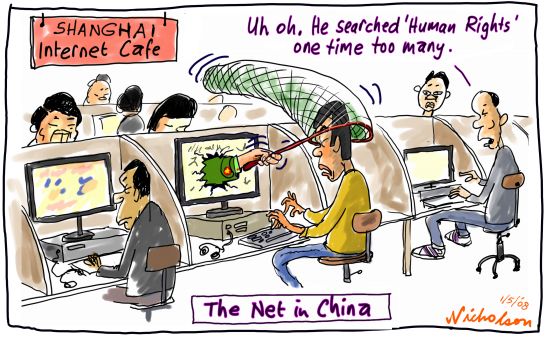
One of the interesting things about China is the Great Firewall, which is the term for the Chinese government's efforts to block access to sites they consider subversive or bad for some reason. This includes such sites as Google and Twitter, and of course, Facebook. I experienced this first-hand while voyaging across China last month; it was odd and annoying to be denied access to social networking. Fortunately, once I boarded our cruise ship and used the satellite uplink, the Great Firewall was neatly circumvented. I'm sure tens of millions of Chinese would like to do that, too, but the government won't allow it.

Of course Facebook has been trying to get into the Chinese market, but China simply won't allow it. They are too wary of Facebook being used as an anti-government tool. China is in the midst of a crackdown on suspected activists and anti-government behavior, triggered by their fears that what's happening in the Middle East might spread to China. So it would seem like a difficult task to convince the government to allow in a social network being used in other countries as a way for people to communicate about their shared dislike of their government.

Still, word is that Facebook is looking for ways to make a deal with the Chinese. This would no doubt involve making big concessions to the Chinese government about access to information on people. No doubt, the Chinese government would want to be able to get full information about any Facebook user in China. This sort of data access is what led Google to abandon the Chinese market directly and move their site to Hong Kong, which though nominally ruled by China still has a great deal of autonomy. Will Facebook take a high moral stance, or will the lure of the enormous Chinese market be too much for them?

Assuming that Facebook is able to eventually cut a deal for access to China, what would this mean for games? China is obviously a huge market for games... it's set to top $8 billion in revenue by 2014, according to this study. That would make China 25% of the total game industry in 2014... and the US would only be at 22%. Ouch. As a point of information, Tencent took in $1.4 billion in revenue in 2010, followed by Netease at $749 million, Shanda Games at $680 million, and Perfect World at $374 million. They are all growing rapidly, too.

Facebook in China might change this dynamic; certainly it would affect Chinese gaming companies, who would be looking at having to adapt to a new platform or face some erosion of market share. This could open up huge new revenue streams for companies like Zynga, who have Facebook games that would likely be very popular in China. (Farming? Gambling? Yeah, those would do well... remember Farmville is huge in Asian countries that allow Facebook to operate.)

Even smaller developers who were able to quickly translate their games could see a big benefit. Facebook could see massive growth in China, and games would doubtless be a top usage of the platform. Keep that in mind as you build your social game titles; keep all those text strings in easy-to-find places in the code.


Thursday, March 24, 2011

Guitar Hero Shut Down... Not Inevitable?

One of the biggest categories of game software over the past few years was music software... until it collapsed. There was an amazing amount of software and hardware sold to go with the Guitar Hero craze. It helped prop up industry sales and mask the shift of revenues to mobile and social gaming. Until it suddenly died... and perhaps it wasn't of natural causes.

This Crunchgear article makes the point that Guitar Hero was a cow that was milked to death by too-frequent new releases, and essentially getting customers to pay for new tracks at premium prices. Eventually the craze ended, or people woke up to the expense, and then Activision decides it's past hope and kills it completely.

Seems to me that with proper management such a franchise could generate revenues for a long time, if you don't abuse the customers. Shows what an obsession with quarterly profits can do, doesn't it? Activision has been busy killing franchises lately (Tony Hawk bit the dust, too), and it's not clear what's going to replace them any time soon. I suppose Blizzard's new releases over the next year will of course be hits. Activision better hope that the new Bungie title is a worthy successor to Halo.

Sunday, March 6, 2011

Markets In Translation

This carrying bag was handed out at GDC... I saw no hard meet in the vicinity.
Sometimes you may be tempted to use Google Translate to handle translating your marketing documents into another language. Resist that temptation. Your cousin's sister-in-law took a class in that language you need? Don't have them translate your copy.

This fine example was provided by Handseeing Information Technology, which it will no doubt surprise you to learn is from mainland China. They had a booth at GDC, and of course I picked up their information packet... once I saw the bag pictured above, I was hooked. Their marketing's working! I'm blogging about it, spreading the word about their... what are their products, exactly?

Ah, they have some flyers here in their packet. One is for Lost, "The Best Web Game You Can't Miss In 2011". Great name for a game; it might make a cool title for a TV show someday. Here's the flyer so you can see for yourself that, in the immortal words of Dave Barry, I am not making this up.

Would you rather have the super blow feeling or the perfect hand feeling? Tough choices...

Note the strong selling points, whose meaning comes tantalizingly close to understandable: High interacting partnership developing system, Attribution and conflict. I feel like I've entered a different reality already. Nice artwork, though.

There are other flyers in the packet... I can't even make out the name of one, but it appears to be a MMORPG. My favorite feature: "Fantasy task and strong camp against setting let you fondle admiringly." Sounds like fun to me! Try that in WoW and you'll get your account banned for sure.

You might ask what they are doing at GDC. Looking for employees, perhaps; there are a number of job openings listed on their web site (which is where Google Translate does help out, so at least I can get the gist of what is posted). Though are they really going to find people in San Francisco who will want to move to China and work? Maybe they are intent on bringing their games to the US market... but if that's what they are looking for, you'd think they would post a big sign to that effect.

Lesson for marketers: When you're going to a country where they speak another language, spend the money to get a high-quality, culturally competent translation of your marketing materials. Consult with someone from that country about how to present your company. If you can't afford that, don't bother going to that country. You'll just waste your money as much as these guys did.

Otherwise, you may have a good game, but a hard meet. And wouldn't you rather Let Fun AnyWhere? I know I would.

Tuesday, March 1, 2011

GDC Day 2

The second day of the GDC is really the day before the real conference... right now there are only 3 or 4 thousand attendees, and tomorrow the number will be closer to 20,000. The first two days are summits and tutorials, with "summits" being mini-conferences on such topics as AI, Education, Social & Online, Smartphone, Independent Games, Serious Games and Localization. It's kind of odd that the fastest growing market segments (smartphone and social games) are relegated to a smaller footprint, but I guess it would just be overwhelming to include those specific topics in the myriad other tracks competing for attention during the next three days.

I attended an interesting session on emerging technologies today, which was discussing the ways being created to bring higher-powered gaming to browsers. Adobe's Molehill project will give developers access to the GPU for accelerating 3D performance with a browser... speeding up things by an order of magnitude or two (check out the videos on that link). Facebook has been working on seeing just how fast they can get Facebook games to perform, with some impressive results. And Mozilla has been working on a version of OpenGL called WebGL, hoping they can provide a universal solution to fast browser performance for games.

I'm not sure what technology will wint out here, but it's clear that browser game performance on desktops, tablets, and smartphones is going to take a big leap forward in the next year. Which is good news for game developers looking to bring some more graphic buzz to their games that can work on a very wide array of devices.

Most of the day, though, was spent renewing old contacts and having new discussions. Lunch with Warren Spector was fun, as was chatting with Eric Goldberg about old times in the game business. There will be a lot fo things to follow up on after the show...as is usually the case.

One thing I have learned, though, is to make sure next year to be there for Google's first seminars... attendees were given laptops running ChromeOS, Motorola Xoom tablets or Nexus S smartphones... wow. Nothing like encouraging developers to attend your seminars!

Monday, February 28, 2011

GDC Day 1

Day 1
Partway through my first day at GDC, and I'm already finding some very interesting things even without attending any seminars yet. There are a handful of booths outside of the seminar area, and the vendors have some products of great interest for developers. Here's a quick rundown and some initial reactions to what I've seen so far:

kontagent. This is an analytics platform for social application developers, or so their literature says. What it really is: Analytics for marketers, that tells you about the demographics of the people playing your games. Your dashboard can give you data on the age of your player base, and where they are spending time and money in your game.... invaluable data for a marketer attempting to sway judgments on how to proceed with design or business. Probably not going to give you sufficient good info unless you have thousands of users, but at that point it seems like it's offering data I haven't seen from other analytics programs.

ideasystem. What is it with companies lower-casing their product names? Seems like an affectation to me. Regardless, this is an interesting middleware play: An entire set of tools and back-end support for creating your own social game or MMO. It's a true 3D engine (using the HeroEngine, no relation to any old company of mine) and the package offers free hosting, free billing and free marketing. They take 70% of your revenues, which seems pretty fair considering what they provide. Of course, if you are doing this through Facebook, Facebook takes 30% when people use Facebook Credits, and then ideasys takes 30% of what Facebook gives you. But it's still a pretty good deal for no hosting fees. Their tool set looks pretty robust... If you want to try some innovative game design or setting ideas for an MMO, this seems like a good place to start to minimize your risk. You could get a game to market much faster than building your own back end, and at far less cost. Hey, if the game takes off you could always build your own back end while still booking revenues from ideasys, and then switch over when your back end is built out.

blue noodle. Yet another lowercase name. Makes me want to type IN ALL CAPS. Sheesh. Despite that, it's an interesting idea: you can add a Clickstrip to your social or mobile game, and if the user clicks on it they watch a high-quality video ad. Why would the user do this? You give them an in-game reward... more smurfberries or the equivalent. Advertisers know they get a user to actually watch an ad. So you get more money with a different type of ad... this sounds like an interesting way to monetize, assuming they have enough advertisers on board.

adknowledge. OK, everybody is lower case now. I guess there's a new graphics rule for logos I wasn't aware of. Will this be overturned by the Supreme Court? Anyway, these guys have what they bill as the 4th largest advertiser marketplace, and it's a way to monetize your apps with a variety of advertising techniques. Worth a look if you're trying to figure out how to get money for your games, and ads are one way you're considering.

Aside from those vendors, I've had a number of very interesting discussions with a lot of people. This looks to be an excellent show for getting business done, and coming up with new ideas and new twists on business, and finding excellent people to work with.

Tomorrow will be even more interesting...

Saturday, February 26, 2011

How To View GDC

The Game Developers Conference (GDC) takes place this coming week in San Francisco, and as usual I expect a great deal of news and insights about the gaming industry from the show. Close to 20,000 people involved in some way with the gaming business will be there, and there will be a spate of announcements, news, and rumors about gaming. I'll be blogging about my impressions of the show, and the information I gather, and my analysis of that information.

If you're attending this show, here are some thoughts about how to get the most from it. Most of these tips are useful for any trade show or convention.

See who's exhibiting, and how much space they have. You can get a very good feel for where things are headed in the business by seeing what types of businesses are paying for exhibit space, and how big their booths are. See lots of businesses catering to console developers? Looks like console development is going to be expanding. Lots of vendors talking about payment services? Look for lots of small companies, many trying to get bigger, who will need payment-related services.

What positions are people hiring for? At GDC the Career Expo is a major section, with all sorts of companies looking for employees. The kinds of employees they're looking for can tell you a lot about the state of the business and where things are headed. Sure, programmers are always sought after... but what type of programming? Is it C++, or is it Javascript, or Flex, or iOS, or Android, or HTML 5? You can get a fair idea of how much interest there is in any market segment by seeing what employees are most wanted.

When you chat with people, what are they saying about the business? Is it bad, good, changing? Have they changed jobs? Working at a smaller or a larger company? If you talk with a large number of people, and a good cross-section of the people, you'll get a sense of what's important to them about the business.

What are the seminars/lectures about, and how well-attended are they? Sure, the really popular speakers or the talks about a hit game will have a good crowd. But just looking at the list of talks can tell you what people are interested in, and seeing which talks are SRO gives you an indication of what people are interested in. For instance, talks about sales figures in mobile games a year ago were packed... because numbers are so hard to find, most of the companies being private.

You can learn much more from these indicators than you can from most keynote speeches. Marketers need to be tuned into these kind of indicators to get their own feel for where things are headed, and how fast they're likely to get there.

Thursday, February 10, 2011

In-App Purchasing Boosts Profits, Burns Parents

I think Gargamel must have designed this scheme to have kids rob their parents.
The in-app purchasing boom that has taken the App Store by storm continues to cause problems with parents. Apple's default 15-minute window for the iTunes password means that if you hand your iPhone or iPad to a child, they can make in-app purchases without entering the password if they do it within 15 minutes after you entered it. And if they keep doing it, or if they happen to know the password (or get an older sibling to use the password)... you can end up with $1400 in smurfberry charges on your credit card, like this mother of a second-grader.

It does bring to mind the ringtone boom, when so many unscrupulous vendors were getting people to buy subscriptions services when they just wanted a little ringtone. It eventually led to the downfall of the ringtone business.

The game industry should be concerned about what children's games with in-app purchases could be doing to the industry's image. And to the image of in-app purchasing, and the perception of game companies. Yes, perhaps Apple should be making the parental controls more obvious or even the default. Perhaps there should be more oversight by Apple on children's games, and requiring them to make in-app purchasing more difficult or more under the control of parents by default. And perhaps Google should be taking notes before in-app purchasing enters the Android market.

Saying that "Oh, it's just a few games that have a problem" or "It's only some kids games, not MY games" is like thinking having a No Peeing section in a swimming pool means that the whole pool will be kept clean no matter what somebody does in some corner. All game developers are in the pool together, and we should make sure nobody's smurfing things up.

Friday, January 14, 2011

Game Sales 2010: Old Market Down, New Market Up

The numbers are in, having been smuggled past NPD's new Iron Pay Wall. It's the best of times, and the worst of times. Game sales are up, game sales are down, game sales are flat all around. It's a complicated picture, and it's best understood by breaking it down into the component numbers.

First off, let's look at the traditional market: physical video games and hardware sold in retail stores. Total sales in the physical channel fell 9% to $5.06 billion in December, bringing the total for 2010 to $18.58 billion, representing a 6% drop. Remember, that's from 2009 numbers, which were already down over the previous year. And that's after a big boost to the numbers from the introduction of Kinect and Move, expensive peripherals that sold in the millions. When you just look at the software, the picture is hardly better: U.S. retail game sales, including portable, console and PC game software, generated revenues of $10.1 billion, a 5% decline over the $10.6 billion generated in 2010.


Meanwhile, increased sales of used games, digital downloads, mobile and social games were up, enough to bring game sales overall to about the level of 2009, at $15.5 billion. That number's only approximate, because NPD is unable to track those categories with precision. I'm not sure how they generate those numbers, since much of that activity is not released by the private companies involved. Maybe they read the entrails of goats, or possibly throw darts.


The key things here are that game sales are shrinking still in the traditional markets, and growing enough in the new markets to offset that. Gamers are shifting their dollars. Publishers had better follow them, or risk getting left behind.

Friday, January 7, 2011

Predictions For Adventure Gaming 2011

I get an excuse to show my game from the dawn of time.
I've dealt with other segments of the gaming market, so I might as well have a go at this one. Adventure gaming is in many ways the progenitor of the electronic gaming market, and is still a rich source of inspiration to electronic game designers. Roleplaying games, card games, board games, miniatures games and other less easily classifiable games are found in specialty gaming stores around the country, and some products make it into wider distribution through bookstores or other types of stores. Occasionally a product like the Pokemon trading card game breaks into wider mass-market distribution, but for the most part adventure gaming products are in limited distribution.

The industry has had its ups and downs over the past few decades. Once a sleepy little backwater of miniature games and war games, adventure gaming had its first big expansion when roleplaying hit with the introduction of Dungeons & Dragons in 1974. The concept took off and hundreds of products followed over the next decade (including my own roleplaying game Champions). Roleplaying was a phenomenon that got national attention, until the growth of electronic gaming (mostly computer gaming) in the 1980s took away some of its audience.

The next great expansion was the trading card game (TCG), which was led by Magic: The Gathering in 1993. Again, the phenomenon burst across the national consciousness, new stores opened, and many companies expanded (including Wizards of the Coast). Collectible miniatures games introduced in 2000 (HeroClix) was another boomlet, though not to the scale of the TCG.

The industry now is smaller than it was in days of yore (that would be the ancient times of the '80s and '90s). Much of the mojo (read: entertainment time and dollars) has been stolen by electronic games of all varieties. Still, there's great creativity in the adventure game industry and new products continue to attract buyers.

  • Publishers find more and more revenue coming from e-book sales. The e-book segment has grown tremendously, as witnessed by DriveThruRPG.com. (I believe I was the first to put e-books into a retail store, on a floppy disk in Acrobat 2.0 format in 1995.) E-books have become much more acceptable as a format, especially with inexpensive laptops and now tablets making it easier to use them in a gaming session. The major problem is the pricing; most adventure game publishers still price e-book versions of their rules quite high, which means piracy is an issue. Since many adventure game publishers depend on physical book sales, they are loath to reduce prices on e-books and so make it harder to be profitable on paper versions of the same book. I predict we'll see more experiments with lower e-book pricing, and greater e-book sales overall.
  • The number of retail stores continues to shrink. Game stores are an endangered species, and increasing electronic distribution is part of the reason. Bookstores are also endangered, and the combination will drive adventure game sales even more towards mail-order, convention sales, and electronic sales. The rate of attrition will slow, as surviving retailers are (by necessity) good ones, and are adept at finding ways to bring in customers and offering a variety of goods for sale. In-store gaming is a big help, as are miniatures games.
  • The explosion of e-book readers will be good for adventure gaming. Not just dedicated e-readers like Kindle, but also tablets and smartphones. If prices are reasonable, then all the players can have easy access to rules without lugging around huge books. More e-book readers means more willingness to buy e-book versions of rules, or at least a larger potential customer base.
  • The growth of smartphones will be good for adventure gaming. Not just because they can be used to read e-books (not well, unless rules are formatted especially for them... which would be a great feature that some publisher is going to stumble upon someday). Smartphones are also handy little computers, as witness the number of die-rolling programs out there. Many other aspects of gaming can be aided by smartphones... and we'll see more of that this year.
  • Adventure game companies will increasingly turn to technology. By necessity, adventure game companies have embraced the Internet as an easy way to communicate with customers. Now Facebook is a becoming a very important tool for customer relations. Twitter is everywhere. Social media is great for marketing purposes, and for connecting a farflung network of fans. I think we'll see more connections with social gaming and mobile gaming... many small games would make great smartphone apps, and some of Reiner Knizia's games are making their way to Facebook. We'll see more of this...
Adventure gaming will have another bumpy year, as new technologies continue to disrupt the same old way of doing business. Companies that take advantage of the trends will continue to do well; others, not so well.