Game Marketing Tips, Analysis, and News


Showing posts with label game marketing. Show all posts

Tuesday, August 16, 2011

How Nintendo Could Succeed Through Brand Extension

Nintendo just needs to have its business guys pelted by gamma rays...
Since Nintendo's been going through its rough patch lately, investors and analysts have been weighing in with advice. One of the most frequent pieces of advice is that Nintendo should make games for smartphones (Android and iOS). If this advice is given in any sort of forum where fans can comment, they immediately pile on. Nintendo fans hate smartphones, it seems, and they certainly don't want to see Nintendo making Mario games for iPhones.

Aside from the visceral reaction of Nintendo's most loyal fans, there is a good reason why Nintendo shouldn't make games for hardware that they don't sell. Platform exclusives sell hardware, and Nintendo traditionally makes money from hardware sales (and a lot of money from software sales, of course). If you could get the latest Mario or Zelda game on any platform, you'd be less likely to buy the game on Nintendo's hardware. So Nintendo might gain some added software revenue, but they'd lose hardware revenue... and other potential software sales that come from locking someone into to their hardware.

Aside from the hardest core fans, most people only have one game console, or one handheld gaming console. So this idea of hardware lock-in certainly makes sense. But it does rely on some hidden assumptions that reveal a possible strategy for Nintendo.

The hidden assumption is that Nintendo would put out the identical game on its own hardware and on other hardware. Sure, a game for the Wii or Wii U could be ported to look exactly the same on an Xbox 360 or a PS3. But it doesn't have too... and that's the point that's even more clear when we're talking about smartphones.

Smartphone games are slammed by console gamers for being lightweight; they don't have the depth or the fine control console gamers are used to getting in a game. True enough, and it's an obvious consequence of the lack of gaming controls (buttons and joysticks) on a smartphone, and the smartphone's role as a general purpose device (where you need to be able to switch to a phone call at any moment).

Suppose Nintendo decided to put out some smartphone games not as a replacement for a 3DS game, but as a way to introduce iconic Nintendo characters to new customers. The game play would be similar, but not identical, and the game's design would be simpler (at least the controls would have to be). Such games would serve to make some money (not much, at the price of smartphone games) and, more importantly, introduce Nintendo characters to customers who may not be aware of them. Properly crafted marketing campaigns would encourage those smartphone gamers to try out the richer experiences available on a 3DS or a Wii or a Wii U. You could even get special content on your Wii U game because you played a Nintendo game on a smartphone.

Imagine, if you will, a regular series of Nintendo games on smartphones creating a groundswell of interest in Mario and Link and Pokemon. Engage those customers further with social games on Facebook and Google+, with plenty of nice virtual items you could buy. Imagine a Pokemon game on Facebook where you could customize your training and battlegrounds. Or an Animal Crossing game, or Pikmin... and all of those could be designed to lead people into the deeper, richer game experience that Nintendo would have waiting for them on their proprietary hardware.

Of course, future games on Nintendo hardware could easily send out social messages to let your friends know about your successes in the games, and encourage them to help you out. Nintendo could connect their iconic characters across social and mobile gaming, and engage a much larger audience. They'd make good money from those efforts, too, with nice high profit margins, while promoting the games on their hardware. This is good old-fashioned brand extension; leveraging the power of your brands by taking them into new areas. If these games don't duplicate your games on proprietary hardware, there should be no downside risk. Unless you think that people would try Mario out on a smartphone and then, because of that, never buy a Mario game on a Wii U. That seems dubious, unless the game is really bad... which Nintendo should be able to avoid easily.

This doesn't even touch on the possibilities of taking old Nintendo games and putting them on smartphones. Nintendo could grab a whole new generation of gamers with games their parents enjoyed. Of course, Nintendo has had those available on their Virtual Console, but that's not easy for people to access. Also, Nintendo has never tried to optimize their revenue from old games, just charging $5 for each one as if the price was set in stone for some reason. They seem to be oblivious to the possibility that they could make for more money if the reduced the price; perhaps they could sell 10x as many games at $2 as they could at $5. Maybe not... but they'll never know unless they try the experiment.

Nintendo still has great potential for success; they just have to be as innovative in their business models as they have been with their hardware designs. Get some fresh blood in their design department, and in the business department, Nintendo. You could still rocket back to the top, but time's a-wasting. You need to make sure the 3DS starts selling well, and you really, really need to make sure the Wii U sells well from the start.

Thursday, August 11, 2011

THQ Loses Big, Changes Course

Perhaps THQ thought its new logo would help its sales, but it appears they were mistaken. They laid off 200 employees yesterday as they struggled to deal with poor sales of some of their recent titles (notably Red Faction: Armageddon and their children's titles). Basically, they plan to cut back their efforts in classic console games to put more focus on social games, like their upcoming Margaritaville Online (yes, it's based on the Jimmy Buffet song... I have no idea what it will be like).

We can add THQ to the ranks of companies that are investing in social and mobile games. Who knows, maybe someday even Activision will decide to give it a try.

THQ does have Warhammer: 40K coming up this quarter, which should do well. They believe they have a strong lineup for the rest of the year, which should help cushion their transition into different types of gaming. I expect they're in for some difficult times ahead, but at least they recognize that the industry is changing and they need to take action. It's the companies that just plan on doing more of the same that I worry about.

Thursday, July 28, 2011

Signs Of the Apocalypse For Nintendo

We gotta get out of here and look for customers!
I can't really say that I'm surprised that the Nintendo 3DS is continuing to not sell well. I thought, back before the launch, that it would have a good launch month and then sales would be mediocre at best. Here's what I said back in January:

The 3DS and PSP2 appear to good initial sales that quickly decline to disappointing levels. Partly because the price points will be so high initially. Once the fanboys have gotten their units, less fanatical customers will look at the prices and think about buying a smartphone instead. Many will. Developers in particular will be annoyed, because developing for these new handhelds will be significantly more expensive than the old handhelds, yet software sales will be worse. This will lead to a quick fall-off of third-party support.


Hmm, looks pretty much like what's been happening. I figured Nintendo would have to respond by cutting the price, but knowing how reluctant they are to do that I figured they would wait until just before the PS Vita release (say in November), then drop the 3DS to $199. But today the shoe has dropped, and it's a damn big shoe: Nintendo has dropped the price of the 3DS to $169, effective August 12.

Just so sales won't fall off a cliff between now and August 12th, Nintendo has also announced that current 3DS owners and those who purchase a 3DS between now and August 12th will get 20 free downloadable games between now and the end of the year. (Not that you get to choose which ones you get... Nintendo chooses them for you. They are old GBA and NES titles... good games, but I don't think it's enough to make anyone spend an extra $80 in the next couple of weeks to buy a 3DS.)

This is a stunning announcement from Nintendo that 3DS sales have not just been disappointing; they have been really, really bad. Nintendo usually resists price reductions with all their might; they refused to drop the price on the Wii despite months of falling sales, only caving when they went ahead and announced the Wii U. And they still only dropped it $50, to $149.

Here's the key info from IndustryGamers:

Nintendo has sold 4.32 million 3DS units since launch earlier this year, along with 13.96 million pieces of 3DS software. In the first quarter ended June 30, Nintendo sold 710,000 3DS units and 4.53 million Nintendo 3DS games.The new 3D handheld, however, has not met Nintendo's expectations. In fact, Nintendo largely blamed the 3DS for its poor first-quarter performance in which the company saw a net loss of ¥25.5 billion ($324 million) and sales drop over 50% to ¥93.9 billion ($1.19 billion) from ¥188.6 billion ($2.40 billion) a year earlier.

I guess losing $324 million in a quarter is enough to make even Nintendo sit up and take notice. Check out those sales figures; 710,000 units in three months, worldwide. That's not even 250,000 a month; and Nintendo still expects to sell a total of 16 million units this fiscal year, when so far they've only sold a little over 4 million? Let's see, that would mean sales would have to quintuple the current level immediately. OK, the price drop will certainly boost sales, but there's no way it'll be a 5x increase. I don't see Christmas sales making up the difference, either. Maybe Nintendo can sell a couple of million over Christmas, maybe even 4 or 5 million... but not 10 million.

Nintendo had been hoping that the arrival of the eShop and some software featuring key Nintendo franchises would boost sales. Clearly, those hopes have been thoroughly dashed. Worse news for Nintendo is that 3DS games are being cancelled (Mega Man Legends 3) or delayed (Metal Gear Solid: Snake Eater 3D). If the third-party publishers are already starting to vote with their development dollars, this platform could be in big trouble.

While Nintendo attempts to goose 3DS sales up into the 1 million a month category (which looks like a huge stretch goal), iPhones are selling at the rate of 7 million per month, and Android phones are selling at the rate of 15 million per month.

This does not bode well for the Wii U, either. Nintendo's got to make some more fundamental changes to their business model than just a price cut here and there, if they want to succeed in a fast-moving market.

Tuesday, July 12, 2011

Korean Juggernaut Nexon Readies IPO

If you thought Zynga's IPO was big news, what would you say about an even bigger social gaming company going public? South Korea's Nexon is going to file somewhere in Asia, not on Nasdaq or NYSE, but it's still huge. The company is 17 years old, and pioneered the free-to-play business model that's been revolutionizing the gaming industry. (What have they done? Maplestory is one of their biggest hits...) They have over 1 billion registered customers, and in 2010 their revenue was $643 million, or just a bit more than Zynga's. Their revenue has been growing 30% a year for the past five years, so in 2011 they are expected to take in over a billion dollars. Their margins are actually better than Zynga's since they don't have to hand 30% to Facebook; reports are that they have 50% margins, which is amazing.

Nexon hasn't made much of an inroad into the US, mostly because our broadband is so pathetic compared to South Korea. Now the US is finally developing enough households that can handle the graphics that Nexon wants to toss their way. Along with Tencent and Perfect World, we're finally seeing some of the Asian companies making serious inroads into the US market. It's going to be a marketing battle with old-line publishers like EA struggling to be a player in these new areas, and Zynga (which will be flush with cash from the IPO) working to maintain and grow its position.

We're going to see more and more sophisticated games being offered for free or very low prices, which is going to really wallop the traditional business (which, by the way, looks like it's going have another month of sales declines; numbers get released Thursday). Yet the gaming business overall continues to grow... the changes are happening fast.

Saturday, July 9, 2011

Game Design By Analysis

I think it's a transporter grid from Star Trek.
This is an interesting article on Gamasutra about Kontagent, which makes analytics software for measuring social applications... giving you people information. In other words, marketing data... you get demographic info about the users. CEO Jeff Tseng talks about how Zynga uses analytics (not Kontagent's; Zynga rolls their own) to optimize their games. He reckons they spend more on analytics than a lot of companies spend on their game development.

I see this as computer-aided game design. You start with something that "feels" right to a designer. With a traditional game, while you do some playtesting, once it's launched that's pretty much how the design is gonna be unless you someday do another edition. Social games are different, though; they are constantly changing based on what users are doing. So you get to use analytics o refine the game design, add and subtract and modify elements to increase user satisfaction. Which means you can find ways to generate more money without also generating resentment.

This is really a new era in game design. In a way it's the love child of marketing and game design, where the two finally get together to do something better than either alone can achieve. There's nothing like being able to look at vast amounts of data to see what's working and what isn't. It sure beats arguing over whose opinion is better. This is part of why social games are here to stay; they've got software helping them optimize the design. Mobile software's got analytics, too, which is similarly helpful. Will consoles ever have tools like these to help developers create better games? Yeah, I don't think so either. At least, not soon enough.

Wednesday, June 22, 2011

With Great Marketing Power Comes Great Responsibility

Hopefully, it will be Duke Nukem: Never Again.
You can create a terrific marketing campaign for a product that's not so good. Should you? When does your desire to create the best possible image for your product become a liability? I submit that happens when your rhetoric outstrips the quality of the product. Unless you're planning to make a lot of sales quickly and then disappear, you need to be concerned about your long-term sales prospects. If not for the current product, then for the next product. Overselling a product leads to disappointed customers who are less likely to buy the next product you're selling.

All too often we see this happen in game marketing. This article about game marketing has some very good points. Duke Nukem Forever is the latest example of an oversold game, which has rapidly gained a very poor rating among critics. Homefront and Brink are two other titles released this year that also suffered from marketing hyperbole. One fine example is pushing the "story" content of Brink, when that consisted of some simple cut scenes before and after each match. No campaign, no characters, no story... just a series of maps with some cutscenes inbetween. Yet it was marketed on its compelling storyline.

This not only hurts the company publishing the oversold game, it hurts the whole industry. Customers who don't get their $60 worth of value are going to be more difficult to sell a $60 game to the next time. They will be less willing to believe you when you say the game is good. This sort of marketing drives down the price for everybody, and helps push players to free-to-play games and used games and other things that developers don't make money from.

Marketers may think they are doing they best they can by praising a game to the skies, but in this age of rapid dissemination of information a bad game quickly gets exposed as crap no matter what it says on the package or on the web site of the publisher. So your chance of getting a good sell-in before the customers realize the game sucks is not really a viable strategy. Besides, the retailers will just send it all back if it doesn't sell. And every time a customer gets burned by a $60 purchase, you can bet he's going to sell it to GameStop and make sure he checks to see what the reviews say before he drops another $60.

Marketers, do us all a favor and don't puff up a game to be something it's not. Present it in the best light, sure; that's your job. Don't transform it into something it's not. And if you're not a marketer, make sure your marketers get this message. For everybody's sake.

Wednesday, June 15, 2011

Ominous Trends

Look at all the innovation at E3!
This article on Cracked.com talks about some ominous trends in videogaming. It's an amusing read, but there's some key points that are worth thinking about.

First, there's not a lot of variation going on... unless you count different flavors of shooter, that is. Innovation is being confined to the creation of better textures or particle systems, not game designs. Why? It's an obvious consequence of higher development costs and lower average sales... while the sequel generates the most reliable revenue. Publishers are getting the message: Better make a sequel to something you know is a success, otherwise you have a high risk of not getting your investment back. And when development takes 2-3 years or more, and the investment is tens of millions of dollars (or more!), you don't like to take chances.

On the flip side, when a manufacturer is pushing hardware sales, they may get innovative as all heck in order to get you to buy more hardware. Even if it means a crappy game, as in Star Wars Kinect. Sure, you can wave your arms around to control your light saber... but you can't walk around.

Too many games are coming with DRM still that requires a constant internet connection, which just makes things annoying. More games are relying on downloadable content (DLC) to make a profit, but all too often they're leaving out stuff that really should have been in the game in the first place, then charging you for it. Or offering DLC that unbalances the game play, leaving you frustrated if you didn't buy in and the guys with the DLC are kicking your butt.

These are all teething pains of the transition to new business models for the game industry. The big publishers are still feeling their way to a new business, and they're stepping on our toes as they stumble around. Meanwhile, smaller developers on new platforms are being innovative and interesting... but they're having a hard time finding their audience and making a profit, too.

We can help by spreading the word about games we like on Facebook and Twitter and other social media. Especially if the game comes from a small developer. It's not like Zynga really needs me to say how much I'm enjoying Empires and Allies when it's already got 10 million players. I'd rather mention Hexalex on the iPhone as an example of a neat word game with some nice features, well worth your $2.99. Take the time to post on Facebook about a game you're enjoying; the developers will appreciate it.

Sunday, June 12, 2011

E3 Post-Mortem: Who Won, Who Lost

See full-size infographic here.
Now that the booths have been struck, the loudspeakers turned off, and the booth babes are fully dressed again, it's time to sort through all of the information, misinformation, hype and rhodomontade to figure out who won, who lost, and who's going to be up and who's going to be down in the coming year. Some interesting data on that point was compiled here by Webtrends, shown in the graphic above.

Adding up total mentions on the internet, Nintendo won with 43.1%, Sony had 31.2%, and Microsoft had 25.7%. Of course, it's not just who got talked about the most, it's what people said about it. Nintendo, going into E3, was certainly the favorite to get the most buzz, since they were introducing a new console.

Nintendo's introduction was certainly not an unqualified success. One very independent measure is what happened to Nintendo's stock price, which dropped 5.7% the next day and then another 5.2% the following day. Many people were confused by the presentation, which focused more on the Wii U controller than on the Wii U itself, to the point where some observers were wondering if Nintendo was introducing some sort of tablet gaming device instead of a new console. It didn't help that Nintendo was more than usually vague about speeds and feeds, leaving the tech journalists without much to talk about. Even when it came to game software, we were shown technical demos and some concepts about game design rather than actual games. Clearly this new console is quite far from being ready for release. It feels to me like Nintendo was rushed into announcing the device by the rather alarming drop in Wii sales over the past 6 months, and the disappointing 3DS sales, which between them has left Nintendo in rather poor condition.

Meanwhile, Sony had to spend part of its time apologizing for the massive security problems and the PSN shutdown. They did manage to redirect attention to their new handheld, announcing the name (PS Vita) and the price ($249). The name is about as enchanting as the Wii U name; Japanese companies seem to have problems coming up with really good names in the last decade or so (I still like Super Nintendo Entertainment System, myself). The price announcement was a surprise, and puts Sony in a good competitive position against the 3DS this holiday season. Assuming, that is, that Nintendo doesn't drop the 3DS price before the PS Vita release, which would be the obvious tactical move.

Microsoft didn't have any new hardware to talk about, which left them pushing existing hardware... specifically, Kinect. They showed Kinect enabled for nearly everything, though it was pretty clear that adding Kinect capability to a shooter is not exactly a must-have combo. Announcements for Xbox Live video content and new games were the primary news for Microsoft.

Publishers were, of course, mostly talking about their new titles. Electronic Arts was pushing their new Origin service, a combination of digital distribution and social network. Activision was talking about their new Call of Duty Elite subscription service. Both of these things mark the shift of the industry from purely depending on retail store sales to moving to digital revenue and subscription services.

Overall, I saw nothing coming out of E3 that would help the traditional retail sales market. It's harder than ever for a title to succeed at retail, unless it happens to be a sequel to a best-seller. Software sales through retail stores have sunk for three years running, and while sales of accessories have masked it somewhat this year, it's clear that trend will continue. Digital distribution and other business models are the future of the gaming industry. Some publishers seem to be fully aware of this, others are being dragged into it... and some are closing their eyes and hoping it goes away.

I think Nintendo has an interesting new console that will do OK for them, but it will not be as successful as the  Wii. Sony has a better handheld than the 3DS in their new PS Vita, but it remains to be seen if a $249 dedicated gaming device can really be a huge success in a world of smartphones and tablets with thousands of free games. Microsoft seems to be hoping that their Kinect, expansion of Xbox Live to Windows and smartphones, and the smartphone partnership with Nokia will be sufficient to maintain their leadership position in the console business.

I think huge changes are still heading for the console business, and Nintendo seems ill-positioned to meet those changes. Sony and Microsoft, at least, have worked hard on their networks for their consoles. Nintendo has barely acknowledged its existence. I fear for their future.

As for the game industry, E3 no longer represents the future. The revenue is quickly shifting to digital distribution, social gaming and mobile gaming. Console gaming will continue to be a major force, but it will no longer be the only game in town.

Thursday, June 9, 2011

Latest Gamer Demographics: 37 Years Old

Not an actual chart of demographic data.
The standard image of the gamer in the media is a teenage boy... well, the latest survey information shows that it's really teenage boys of all ages. And women, too. This survey is from the Entertainment Software Association (ESA), and it surveyed 1200 households across America. (The PDF of the full survey can be found here.)

Some key facts from the survey: The average gamer is 37 years old. Some 42% of gamers are female, and women over 18 make up more than one-third of all gamers.

Interestingly, some 55% of gamers regularly play games on their smartphones. Looks like there's more overlap than Nintendo would care to contemplate between gamers on traditional consoles and smartphone gamers.

This sort of demographic information is crucial to determining your marketing your plans. You've got to have a reasonable idea of how large your market is, and who you are aiming at, if you hope to do a good job of getting your message across.

Sadly, demographic information is all too hard to come by unless you're a big enough company to purchase surveys. The rest of us need to glean what facts we can from surveys such as this one.

Monday, June 6, 2011

How To Analyze E3 2011

I believe this refers to the level of hype.
The circus is in town this Tuesday, and it's going to be loud. That's always been the case with E3; at the beginning of the show it's not so bad, but gradually each display with speakers on it gets turned up louder in order to be heard better over the crowd noise and the other booths... and once one is turned up, nearby ones have to be turned up also... and before you can hack a Sony website, the expo hall is pulsating with the maximum volume output from hundreds of speakers. It's an almost physical assault on your body when you step in there.

Equally powerful is the onslaught of marketing hype. Claims are inflated, then pumped up a little more... then untethered from reality to float freely into the blogosphere. E3 is a cacophony of thousands of voices all shouting to be heard, waving shiny objects to catch your attention, and claiming to be the most important thing at the show. (Just check out this list of press conferences for the first day... imagine attending a dozen of those.)

How do you deal with this wave of information? How can you derive any useful data from it? First you have to decide what you're looking for, since there's many things you can learn at E3. Are you trying to find out what will be the hit games for a particular platform for 2011? That narrows your search considerably, and you can just compare lists of Top Games of E3 2011 from a batch of game enthusiast websites to find the names that recur on each list. Information found, and you didn't even have to sit through a press conference to get it.

If you're looking for something more subtle, such as industry trends for the next year, or whether Nintendo's new console will be a hit, answers will be harder to find. Determining industry trends may be easier from a distance than when you're actually at the show. I plan on sifting through the reporting on E3 to look for key pieces of information. For instance, what are the three most important announcements from the biggest companies? Finding out what they consider to be most important gives you a clue to where they will be putting their marketing emphasis in the year ahead... and you think about whether that is really something important that can change the industry, or is just another AAA game that might sell well but won't affect the direction of the industry.

Look for major new business initiatives, new investments, new hardware, new business models, acquisitions and mergers, major business deals. Ask yourself "If this things goes as well as it possibly can, how would it affect other companies?" If the answer is "Not much" then it's not an important industry event no matter what happens. Ignore it and move on.

Once you skip past the 47,000 new product introductions and just look at the list I mentioned in the last paragraph, you'll find it's going to be much easier to figure out what's going to be happening in the industry over the next year.

Oh, and in general you can expect companies to be cheery and upbeat about their prospects for the next year, regardless of whether or not they actually expect that to happen. They'll also probably be positive about the industry as a whole. Third-party publishers will likely say they are excited by new hardware (like Nintendo's Project Cafe or Sony's NGP) and think it's going to be a hot seller. Why? Whether or not they really do, they hope that saying those things will help make the hardware sell well... because if it does, any products they create for it will do better. So they're just trying to help themselves out.

Ignore all the happy talk. Look back at last year and see how positive everyone was about Nintendo's 3DS. It was awesome, killer new technology that would really boost the business for everyone. Uh huh. The reality is much more anemic. The 3DS has had a good first week and lackluster sales since then. We can hope Nintendo will boost its sales with some powerful new titles and heavy marketing spending, but that's by no means certain. Me, I think its problems go beyond poor launch titles and not enough marketing; I think 3D is a gimmick that people aren't really that interested in, and the hardware is clunky and expensive, and their business model is antiquated. All those things can be fixed... but I'm waiting to see if Nintendo begins to address them at E3.

So discount what industry types with a vested interest say about new hardware. Look for hard numbers when execs speak about their products. If they really are happy they won't be afraid to quote actual sales figures. If they say things like "We're thrilled with the sales!" rather than a specific number of units, they really aren't thrilled. You shouldn't be either, in that case.

Best advice: Follow the money. And follow the sales numbers. Don't follow the shiny objects.

Thursday, June 2, 2011

Portal 2 ARG Examined

You may recall the interesting Alternate Reality Game (ARG) that Valve ran to promote the launch of Portal 2. It excited some controversy, with some fans becoming upset that the game didn't work exactly as they had thought. The whole process is examined in depth in this Gamasutra article, which is worth a look.

The controversy arose because the ARG was designed to reward the players with the early release of Portal 2; the amount of time the release would be moved up depended on the amount of time all players spent on the indie games being promoted by the ARG. This wasn't exactly clear to everyone; some people thought the game would be released early merely if enough people purchased the indie game bundle.

This was a rather complex ARG with a lot of moving parts, and the article goes into depth on how the plan was created and executed. This is a good guideline for creating your own ARG, showing what sorts of considerations go into it and how involved the process can be.

I applaud them for their ambitious and creative marketing attempt, even if it had some flaws. Even the controversy helped them, I think, by publicizing the promotion.

Monday, May 23, 2011

They Just Don't Get It

Typical software pirate?
Sometimes you just have to shake your head in wonderment at how people can refuse to see the obvious. Here's a good example: Lionhead's Mike West, the lead combat designer for Fable III, complains about secondhand sales being worse than piracy. Well, he's complaining about both, really. I can understand that if you think pirates are taking away your game sales you'd be mad. But no one really know how many actual sales are lost to piracy. Sure, sure, there are estimates... from organizations with a vested interest in estimating high. It's certainly not clear that a pirated copy would have been a purchase if piracy was impossible. Certainly, some percentage of pirates would buy a game if they had no other choice... but is that percentage really high? No on knows for sure.

Complaining about secondhand sales, well, that's somewhat different. First of all, secondhand sales are perfectly legal. And in this industry you have to be careful about saying too many nasty things about secondhand sales of games, because pretty much all the major retailers sell secondhand games right along with the new ones. You really don't want to piss off your major retailers that give you the majority of your revenue, do you?

Ultimately, though, developers can do very little about either piracy or secondhand sales. You have to figure out how to deal with those realities. Sitting around complaining about them does not help your profits one little bit. Counting up money you might have made if someone had bought a new copy of your game instead of a secondhand one is a waste of time. Developers need to embrace the realities of the marketplace and figure out how to use them to their advantage.

Piracy means that people are learning about your games and hopefully enjoy playing them... which is then an opportunity to sell them something. Perhaps DLC, perhaps a special edition with the cool figures they can't get anywhere else. If you've got a regular service going on, piracy is not a problem... Blizzard doesn't worry about it. Sell them physical goods that can't be pirated. Have them sign up for access to special forums, but only if they are registered users. Does Zynga worry about piracy? No, they don't. They spend their time refining their games to appeal more to their players, and coax them into buying items.

Secondhand sales have become a significant part of the business because prices are too high for the value contained in most games. Which is why customers are flocking to social games and mobile games, and free-to-play MMO's... they can try things out, and spend money where they see it's worth it to them. The mobile game model of free or low-cost is going to be in the family rooms soon, so developers had better learn how to make money from it. The developers who spend their time complaining instead of designing are the ones who will fail in the new game industry landscape.

Friday, May 6, 2011

AppDroid Apocalypse, Nowish

The face of destruction.
With Google's I/O conference coming up next week, it's a good time to look at what's happening to Google TV and Apple TV. According to this report, Google TV 2.0 will be coming with support for other chips than Intel, Android 3.0, and a full Android Market unleashed. What's that all mean? A lower price tag, since ARM-based chips are much cheaper than Intel's, an easier interface, and better graphics.

Which all means that Google TV may have a chance... if Google has been smart enough to cut some deals allowing content from major broadcasters to be shown through Google TV, unlike the first version. Sorry, Google, but if people can't watch the TV they want to watch through Google TV, don't expect the unit to take off.

Meanwhile, all is quiet on the Apple front... too quiet. Rumors have been bubbling up about the massive data center Apple has constructed in North Carolina, which apparently will be used in some fashion for iTunes. But it's probably connected to Apple's recent purchase of iCloud, and the streaming music service, and the deals Apple's been cutting with major music labels. I suspect even more than that... other rumors have Apple eying Netflix's business.

It all makes sense to me. Apple could certainly turn Apple TV into another huge growth center if they can put the pieces all together. Imagine streaming video deals where you could use the Netflix model, which has proven so popular Netflix now has more subscribers than Comcast. If you focus on streaming content, which you can do if you have a massive data center, then you don't need large local storage... a few GB in an Apple TV unit would suffice, thus keeping the costs of the unit way down. Streaming video, streaming audio, purchases kept in the cloud instead of stored locally... Now you put an A5 chip in the Apple TV, and suddenly the graphics power is now better than a Wii, and closing in on Xbox 360.

Flip the switch and allow the full App Store to be there on Apple TV. Now you're seeing a $99 box that outdoes a Wii for gaming power, easy use of an iPhone or an iPad as a controller (easily outdoing the planned Wii 2 controller-with-a-screen we're hearing about), and thousands... no, hundreds of thousands of apps available. Most of them for free or a few dollars... tens of thousands of games, and thousands of other types of apps, and more created every day.

Yeah, this is all coming soon to your family room, once Apple gets all the pieces in place. The media deals are the hardest part. The data center is ready, the hardware is ready. The gaming industry? Not ready. Nintendo, Microsoft, Sony... this is the next enemy you have to fight. Apple has hurt your handheld business, Nintendo, now they are aiming right for your jugular in the family room. Sure, Nintendo has their new console planned... but it will be hundreds of dollars, not $99. And I see no sign that Nintendo is going to embrace the new app business model that has propelled the smartphone business to amazing growth in the last few years.

Just to make it all worse, Apple is on a one-year hardware cycle, where the hardware gets a significant power boost every year. Think the new Apple TV that will be coming, with an A5 chip, is too wimpy? Wait a year for a newer $99 box. Another year or two after that and it will be more powerful than Nintendo's new console.

I still think Nintendo, Microsoft and Sony have some amazing assets in this fight, and a chance to continue to hold significant market share in the future. But unless they start embracing the future sooner rather than later, they are going to see their market share diminish between the onslaught of Google and Apple. The handheld business is just about a lost cause now, though Sony seems to be fighting an intelligent rearguard action with the NGP. Next up is the console business... and I can see that being upended the same way the phone business was upended in a few short years, by Apple.

Developers, get ready to rumble...

Thursday, May 5, 2011

EA Makes Digital Money

EA is hoping this is better than Star Wars 1, 2, and 3. It could hardly be worse.
At least there's one traditional publisher that has seen the future and is preparing for it. Electronic Arts has had a string of rough years, but part of the reason for that is they've been shifting their business to take advantage of the shifts in the industry. EA has been investing heavily in social games (buying Playfish), and putting a huge number of games onto the iOS platform, and making big strides in selling virtual goods. The results are starting to come in, and the recent Q4 numbers look pretty good.

EA's managed to eke out $151 million in profit, on sales of $1.1 billion. For the full year, their revenues were down a bit (dropping to $3.59 billion from $3.65 billion, and their losses narrowed to $276 million. (Which actually was a profit if you look at the numbers and consider some of the extraordinary items...but accounting is too complicated for this simple blog to get into.) Their digital revenue for the year was over $833 million, so it's a good 25% of their total business now.

EA's well positioned to take advantage of the rapid growth in social and mobile games, though they still have to make sure they make good money in the packaged goods market. These transitions never proceed at the expected pace, so having a balanced portfolio of games in different market segments is prudent. EA's plays look like they're doing pretty well, as both Playfish and EA's iOS games increased their sales over 100% in the fourth quarter over the last year's fourth quarter.

Still, EA isn't going whole hog into new ways to make money... they still plan to charge a subscription fee for Star Wars: The Old Republic instead of going the free-to-play route. At least, not initially... we'll see how that decision holds up after a few months. EA's also planning to spend big on marketing to try and take awya Call of Duty's market with some upcoming games. They're not all digital yet... but give it a few years, and those numbers will move quite a bit.

It does make you wonder when Activision is planning to dabble in mobile or social games... if ever.

Wednesday, May 4, 2011

Hot New Gadget: Watch & Game?

The watch with the computer brain.
Everything old is new again... Here's word that TI and Fossil want to bring back the computer watch, this time as an accessory to your smartphone. Featuring an OLED screen and Bluetooth, this wearable computer would give you updates from your smartphone without the need to reach into your pocket. Or, I guess, interrupt the game you're already playing. It's called the Metawatch.

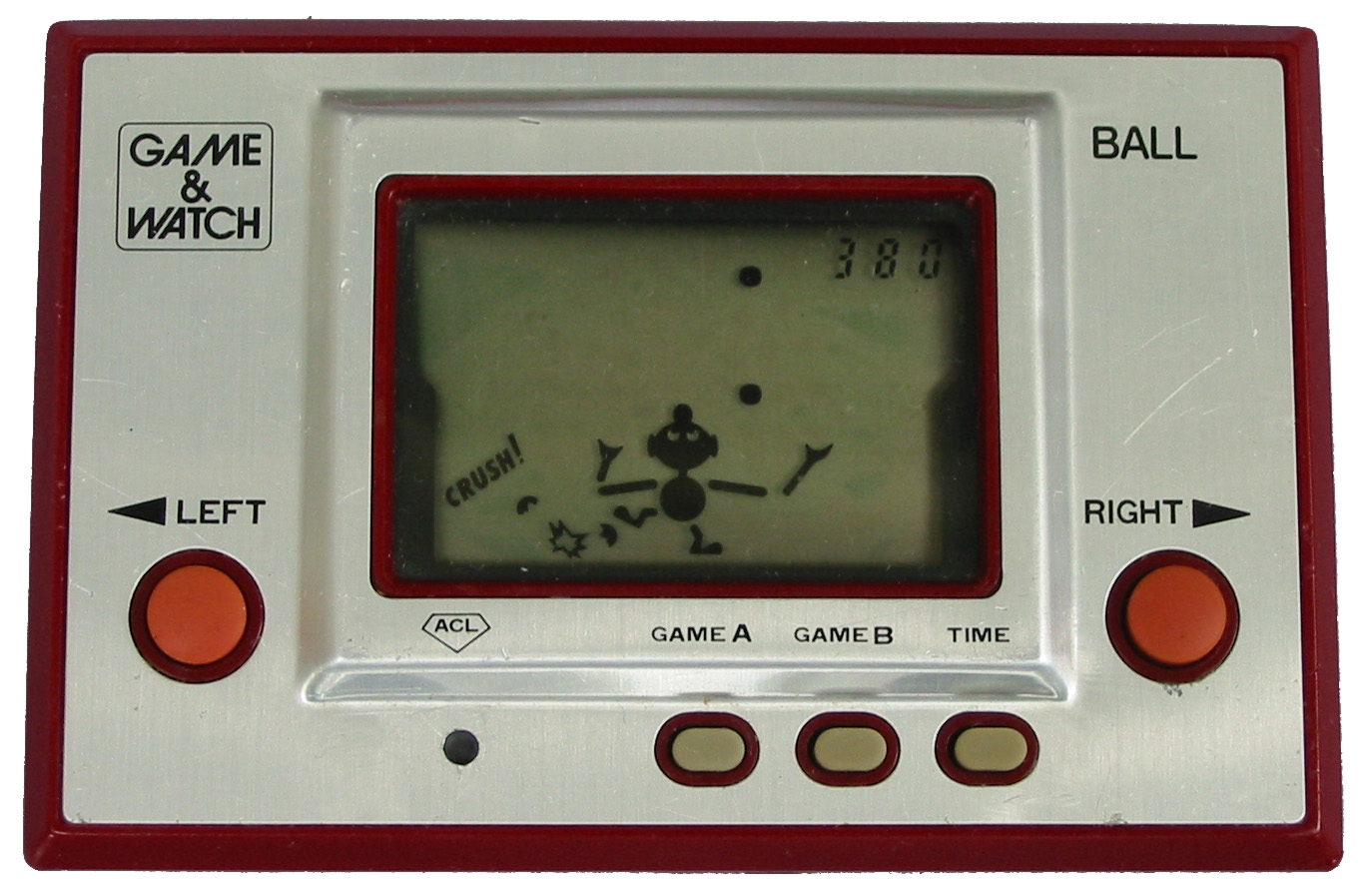
It also has an accelerometer in it, so of course it leads one to start thinking about gaming on watches... maybe you could have a little character designed just for the low-res screen (96 x 96 pixels). Maybe you could call him... Mr. Game & Watch? Just an idea...

Monday, May 2, 2011

Game Funding Up

Funding in the game industry grew 130% in 2010, to nearly $2 billion.
While the traditional game industry is still looking at monthly sales declines, now going on the third straight year, other types of games are doing rather well. A recent study showed that funding and acquisitions rose to nearly $2 billion in 2010, a rise of 130% over the previous year. Of course, the bulk of that was in social and mobile games, along with online games and digital distribution and freemium and all the other new business models that have been growing explosively for the last few years.

Asian companies have become major players, with Chinese companies like Tencent dropping hundreds of millions for companies like Riot Games, and Japanese companies investing hugely in companies like ngmoco. This goes to show the strength of the Asian markets in gaming, and how much money is being generated there by online games and virtual goods sales.

As this trend accelerates, the transformation of the game industry continues. Except among certain old-line industry giants like Activision, where apparently it's just business as usual. If they didn't have Blizzard around to keep cranking out megahits, you do have to wonder how they would keep the growth up as they avoid investing in the high-growth areas of the game industry. I guess they're content to have a larger share of a shrinking market... but eventually they're going to find a top end to how many units of the next Call of Duty title they can sell.

Meanwhile, gaming becomes a bigger part of the lives of a wider audience than ever... many of whom could not care less about Call of Duty, or in fact have never heard of it. How many Farmville players even know about CoD? I'd guess less than half, maybe a lot less than half. Zynga might even take the time to note that fact, but I'm sure they're too busy counting money to notice.

Hard-core gamers are no longer the core gaming audience. It's perhaps disappointing to those hard-core gamers in the industry who like to make games that they themselves play. But not to those who are in the game business to make money... they just head for where the money is.

Thursday, April 28, 2011

More Free Android Apps Than iOS

Handy reference for the number of applications on different platforms; original here.
According to Distimo, there are now more free apps for Android (over 134,000 of them) than for iOS (over 121,000). Of course, iOS has many more paid applications than Android (about 3 times as many, in fact). This does go to demonstrate the fact that Android app developers primarily make money from advertising or virtual products (even before official in-app purchasing appears on Android) rather than from app sales.

This makes it harder for developers who'd like to charge for their Android app: Customers are expecting to get their Android apps for free since so many already are free. It's a vicious feedback cycle. Developers can spend their time complaining about the situation, or just realize it is what it is and figure out how to profit from reality.

I recommend the second course of action.

Interestingly, the same report shows that iPad applications are increasing in price over time.
See the larger version here.

The average price paid for an iPad app is over $5... quite a contrast to the iOS apps which struggle to crack $2. Encouraging news for game developers looking to make some money on the iPad, though. Meanwhile, the number of apps featuring in-app purchases has declined. Perhaps because there are more books being put into the iPad?

Friday, April 15, 2011

Slick Marketing for Portal 2

First time I've seen a billboard campaign for a videogame.
Valve is pulling out all the stops for Portal 2. Not only have the put a billboard campaign in place (with multiple billboards, not just in Silicon Valley), they have come up with a very clever scheme to both sell a lot of games and hype interest in Portal 2. It's a variant on hostage publishing, which is where you hold off on publishing a product until you have enough pledges to make it worth your while. In this case, Valve is selling a group of 13 indie games on Steam called The Potato Sack at 75% off (it's $38.72, a pretty good deal for 13 cool games). You get not only the 13 games, but a potato hat in Team Fortress and a special skin Portal 2 co-op play. The promotional price is only good until Portal 2 launches.

But here's the best part: If you buy The Potato Sack and play the games, you can speed up the release of Portal 2... but only if enough people buy it and play it. Brilliant marketing idea, guys. My potato hat's off to you. Make money selling a group of games and use that to help spread the word about an upcoming title and boost its sales, too. Talk about marketing that makes money... this is the kind of clever marketing we should see more of. Creativity in marketing is rarer than creativity in game design, and that's not all that common.

Take a tip from this marketing campaign and put some creative energy into your marketing.

(Hat tip to Greg Peterson for pointing out this marketing campaign to me...)

Update: Well, perhaps not everyone is as taken with this marketing campaign as I am. According to this post on IndustryGamers, there have been a number people dissatisfied with the campaign, as they thought just buying the games would lead to an early release, not realizing the games would have to be played. That's a good complaint if the actual phrasing was unclear; I'd have to go and look at it to see for myself. Still, I think the campaign idea is a good one, even if the execution was flawed.

Traditional Videogame Sales Continue Decline

No, I don't know what this has to do with March game sales, , but it showed up
when I did an image search for March 2011 game sales. Go figure.
March numbers are in, and once again we return to the old story: Total sales of hardware and software in retail stores dropped 4% in March, marking the third straight year of declines. Software dropped 16%, while hardware grew 12% and accessories grew 13%. Don't you think it would constitute a trend by now? Yet some executives continue to make public statements that the traditional business is strong. Activision, for one, doesn't seem interested in digital distribution or social gaming or anything other than getting out more retail boxed goods. At least EA is making a strong effort to move into new business areas; their stock price has suffered for it, but at least as the transition continues they are positioning themselves to take advantage of it.

It makes me wonder just how relevant new console introductions are. With things like OnLive being built into TV sets, and Google TV and Apple TV (also likely to be built into TV sets), the era of the single-purpose device for games and games only is coming to an end. The inexorable progress of Moore's Law has provided ample CPU power at a low price to enable pretty good game output in very inexpensive hardware. Social gaming has shown new monetization models, and digital distribution has opened the floodgates to content. The combination of these trends is putting a fierce squeeze on the traditional business, and we're seeing that reflected in the numbers.

Even the current generation of consoles have become aware of this. All three have other capabilities than just playing games; you can watch movies or TV shows (via Netflix), play music, show pictures, and other functions. All three allow some form of digital distribution, albeit tightly controlled. Free-to-play games are heading to the PS3 and likely the Xbox 360, as the new monetization model also spreads there.

The logical extension is the Apple/Google TV direction: low cost or invisible hardware (built into the TV) that provides a huge range of games, many free or ad-supported, with many other types of apps available. The whole app market model has proven enormously successful, and is driving the tablet market and will soon come to the TV to transform the family room. In the process it will upend the gaming market. I fear companies that have not realized this will be facing a very difficult time, and that includes Nintendo, who has traditionally been very far behind in their online efforts.

Thursday, April 14, 2011

Wii 2 Rumors Explode

Probably not what the Wii 2 will look like.
It's all over the 'net today: Rumors about Nintendo's successor to the Wii. The Wii 2, Wii HD, or more probably, some other name entirely, has suddenly become a major topic on the game sites. The rumors point to some features: HD graphics output (a total no-brainer of a feature to add), and they are calling it more powerful than the Xbox 360 or the PS3. Which will be quite interesting, if true, since Nintendo has not been the horsepower leader in the marketplace since... well, it must be the N64 days back in the '90s. Raw horsepower can get expensive, though; will Nintendo really be willing to hit a high initial price point?


Supposedly the new console will be announced at E3 for a 2012 shipment, and it's being shown to industry leaders now. The new console is supposed to be backwards-compatible with the current Wii, and there will be a pre-announcement from Nintendo coming before E3. When queried, Nintendo gave its stock "We don't respond to rumors" answer. Check out the sources yourself here, here, and here.


This is NOT a coincidence, folks. Clearly Nintendo is finally letting a little rumor-mongering happen. They're floating a trial balloon, in a totally deniable way, to gauge reactions. It must have finally sunk in that Wii sales (and third-party support) are on an irreversible downward trend. Price cuts will definitely help boost sales, but at the expense of profitability. And even with a price cut to $149 (and eventually to $99) for the Wii coming (rumors say a price cut is coming in May) I don't see third-party support recovering. There are too many other places for publishers to invest their development dollars.

I'd say an E3 announcement of a 2012 release date for a Wii 2 might seem early, but it would be good for Nintendo to get some excitement rolling early. Perhaps they felt this was necessary given the less-than-stellar response to the 3DS in the marketplace. I think they were hoping the 3DS would be such a huge hit they could take their time with a Wii successor. Now that it's clear the 3DS will not, by itself, save Nintendo's profits, they are starting to leak out info about a Wii successor to generate some excitement about Nintendo again.


What are the chances for a Wii successor? It's difficult to really say how well a console might sell before you know little details like price, capabilities, and software... but certainly the Wii is way past its prime. The Xbox 360 and the PS3 are starting to look a bit long in the tooth, but both Sony and Microsoft would love to get a few more years of nice profits out of those consoles before they enter the maelstrom of new hardware again (and all the losses that implies for the manufacturers, plus the pain and suffering of developers trying to figure out how to use the half-baked tools for new consoles... I can hear the screams from here).


If Nintendo is really going for sheer graphics horsepower, it represents a change in their approach. Perhaps they couldn't think of an inexpensive add-on that was as powerful as motion-control has been for the Wii, and with that out of the picture they figured horsepower was the best bet. There are problems with choosing horsepower, though; pushing pixels and polygons gets expensive in terms of silicon. And as the number of polygons gets higher, the differences to consumers are less and less compelling. The difference between 1000 polygons and 10,000 polygons onscreen is huge; the difference between 10,000 and 100,000 is not as readily apparent; and the difference between 100,000 and 1,000,000 is something you have to look at carefully to see, and non-gamers would easily not see it.


In the past Sony would talk about things that weren't polygons to say why new, expensive hardware was worth the money... they used terms like Emotion Engine to say that games could now have emotional content because of the horsepower available. Did we ever see those? No, not really; developers found it far easier to build better graphics than to figure out how to make games more emotional. We are getting games that are more engaging, but it's a slow process. Most of the new horsepower in the latest consoles is devoted to better graphics, displayed faster.


So I think the horsepower route is a risky one for Nintendo, but they are in need of a boost right now. Sales are sagging, the 3DS has not set the world on fire, and their stock price is in the dumper. Perhaps some adroit rumor-mongering can bring it back up for them.