Game Marketing Tips, Analysis, and News


Sunday, October 30, 2016

The Death of Game Reviews


While there's no attending physician, and no generally accepted criteria for a cultural phenomenon subsiding into irrelevance, I think we can call it here and now: Game Reviews are dead, at least in terms of cultural influence. Bethesda Softworks' decision this week to stop providing advance copies of games to reviewers signals that reviews, long diminishing in effect, have crossed over into complete uselessness. Or, at least game reviews in the classic sense of being written by professional reviewers for professional web sites or magazines.

Here's what Bethesda said in their press release:

"At Bethesda, we value media reviews. We read them. We watch them. We try to learn from them when they offer critique. And we understand their value to our players.

Earlier this year we released DOOM. We sent review copies to arrive the day before launch, which led to speculation about the quality of the game. Since then DOOM has emerged as a critical and commercial hit, and is now one of the highest-rated shooters of the past few years.

With the upcoming launches of Skyrim Special Edition and Dishonored 2, we will continue our policy of sending media review copies one day before release. While we will continue to work with media, streamers, and YouTubers to support their coverage – both before and after release – we want everyone, including those in the media, to experience our games at the same time.

We also understand that some of you want to read reviews before you make your decision, and if that’s the case we encourage you to wait for your favorite reviewers to share their thoughts."

What's happened to professional game reviews is the rise of social media, the growth of reviews in online stores, the increasing popularity of public betas, and overwhelmingly the huge influence that livestreamers and YouTubers wield. People don't look to professional game reviews to make their buying decisions – they ask their friends, they look at what people have said online, and most of all they look for YouTube videos or a livestream where they can see the actual gameplay and listen to someon's commentary about the game.

Even though reviews don't seem to affect sales so much any more, why would Bethesda stop providing advance copies of games for review? It's very simple: Pre-orders. Bad reviews could hurt pre-orders. Heck, some game writers are even calling for people to stop pre-ordering, because it encourages bad games. While that may or may not be true, what is true is that once you've purchased a console game, you're not really able to get your money back unless you return it unopened. Which is why we see pre-order bonuses becoming more popular – publishers want to lock in your purchase by offering some goodies you can't get if you wait until the game comes out. Or until reviewers have had a chance to tell you if the game is any good or not.

Yes, that's the way the business has worked for decades. True, if a publisher ships a bad game there's going to be some blow back – reduced sales on the next title, perhaps. But it's usually not very substantial compared to all of those lovely sales that aren't refundable. And as game budgets rise, risk rises too – giving publishers even more reason to want to lock in your dollars before you even have a chance to know if you like the game or not.

Part of the reason free-to-play games have done so well is that they turn this model on its head. You don't pay anything unless you've found the game worth playing, and want to get more out of the game by spending some money. Now, the problem for developers is that all too often there aren't enough paying players to make the game profitable.

Ultimately the problem gets resolved, as good quality games rise to profitability and low-quality ones can kill off a franchise or even a developer. Players now have plenty of fine gaming choices all around, and if they really feel they are getting a raw deal by pre-ordering they'll stop.


Still, the professional game review matters very little these days – unless you can deliver it engagingly during a livestream or in a cleverly crafted video. It's bad news for traditional game reviews, but good news for streamers and YouTubers.  

Thursday, September 22, 2016

Value Is The Key to In-App Purchases

Many games are free-to-play these days -- the majority of mobile titles are F2P, some of the leading PC games are F2P, and now even some console games. Usually, that means the games monetize through in-app purchasing (the sale of virtual goods or services inside of the game, usually abbreviated IAP) or advertising. Surveys show that many gamers feel in-app purchases detract from their enjoyment of the game -- according to an Ipsos survey, 47% of UK gamers feel that way. Why? And is this a problem that game designers need to tackle, or game marketers?

It's useful to take a look at some examples of games with in-app purchases that are doing very well, like League of Legends, World of Tanks, Clash of Clans, and others. Those games don't have a problem with players; their players seem pretty happy to have the opportunity to purchase things for the game. (The image of DJ Sona above from League of Legends is an example of an extremely popular in-app purchase.) Those who don't buy in-app purchases enjoy playing the game, or at least don't seem put off by the fact that you can buy things in the game. At least, we can infer that from the tens of millions of people playing these games on a regular basis.

What is it about some games that makes IAP annoying, and tolerable or even appreciated in other games? There are two factors, I believe. One is the game design: Games that annoy you with purchase requests (intruding during the game play), games that require purchases to speed up play (time-gating), games that let you buy your way to victory (though this depends on the culture, as its a desirable thing in China), those types of game design make IAP into something annoying. The other factor is value: Games that offer a good value in IAP don't annoy the players.

The important part of this value determination is that what constitutes value comes from the player's point of view, not the designer or marketer's idea. The fact that you can buy 100 game tokens for only $7 instead of $20 doesn't mean it's a good value to the player. Sure, maybe it's a deal compared to is usually charged for game tokens, but that may not connect directly to value in the mind of the player. What can you get for those game tokens? Are they readily usable for things that players definitely find useful or enjoyable? The determination of value comes from using a player's point of view to look at things.

You may not really know what is valuable to players at the outset of the game design, but game testing should reveal that if you ask the right questions. You could even run some tests with different groups of players to see what they like, and what they think is a good deal for an in-app purchase. Sure, start with some assumptions, but test them out and verify them. You can also test the effectiveness of different price points, too.

The ideal F2P game lets you have fun with the free version, for as much time as you like. Then it allows you to pay something to increase your enjoyment, but in a way that doesn't leave you feeling annoyed if you don't buy it. Doing this well requires both good game design and good marketing input.


Sunday, September 11, 2016

The 4K HDR Console Wars Begin

Yes, 4K/UHD (Ultra High Definition) and HDR (High Dynamic Range) consoles are here, and the marketing battle is beginning. One major player has left the battle, and a major new weapon is yet to arrive, but it already looms large in strategy calculations. Let's survey the order of battle, and try to predict the outcome.

First, Microsoft introduced the Xbox One S, a smaller, lighter Xbox One that retails for $299 in its basic version. It's also about 15% more powerful than the original Xbox One; supports HDR output for games; supports 4K/UHD output for streaming video; and includes a 4K/UHD Blu-Ray player. The list of games with HDR output is short right now (Forza Horizon 3, Gears of War 4, NBA 2K17, and Scalebound) but you can bet it will grow. HDR support is usually quite easy to add, according to developers. The console will not support 4K gaming.

Now Sony has introduced its competitor: the PlayStation 4 Pro, with over twice the power of a PS4 (4.2 teraflops as opposed to 1.8 teraflops), support for 4K/UHD and HDR output for games as well as streaming video, for $399. Oddly, while the PS4 Pro includes a Blu-ray player, it is not a 4K/UHD Blu-ray player. The PS4 Pro, which has a 1 TB hard drive, will ship November 10. Meanwhile, the PS4 has been revised to the PS4 Slim, a smaller and lighter box with essentially the same capabilities as a PS4, retailing for $299 and shipping September 15.

Just to make matters more interesting, Sony also announced that a firmware patch would be pushed out to ALL existing PS4's that will allow them to output HDR to suitable TVs – that is, if you have any PS4 and a 4K/UHD HDR TV (virtually all 4K/UHD TVs support HDR), you'll be able to run games in HDR mode – provided the publisher of the game has provided a patch for that capability. Supposedly that's pretty easy to do for most games, but we'll see.

Looming on the horizon for launch in the fall of 2017 is Microsoft's Xbox 'Scorpio', a far more powerful Xbox One that has 6 teraflops of processing power. That should support true 4K gaming output. As of now, the exact specs and price are unknown – we probably won't know that until June 2017 (E3) at the earliest. This gives Microsoft plenty of time to decide its strategy based on the reception for the PS4 Pro.

The response so far to this news has been mixed. Some feel Sony is going to do very well with this strategy, expanding their lead in the market. Others think the PS4 Pro won't do all that well due to the fairly low number of 4K/UHD TVs installed, though it's worth knowing that Sony promises you can see visual benefits to games on a PS4 Pro even through a standard HDTV set. Assuming, once again, that the publisher of the game has provided some sort of patch to let the PS4 Pro show its power.

We're really in unknown territory here. Apparently the PS4 Pro does a pretty good job of making 4K games look very nice, even though it doesn't have the raw horsepower to drive true 4K games, but instead relies on some clever tricks to upscale lower resolution output to 4K and make it look pretty dar good. All observers seem to agree, though, that HDR color makes a big, noticeable improvement in games. The interesting thing with that is that soon all PS4's will be able to play HDR games, and so will the Xbox One S – but not older Xbox Ones.

So how many of the existing 40 million PS4 owners will upgrade (through selling their PS4 to GameStop or someone else) to the PS4 Pro? No one knows. Will Sony ever break out PS4 Pro sales from PS4 sales? Doubtful. And while the number of 4K/UHD TVs right now isn't large, the price on them has dropped to where HDTVs were last year. We should expect the bulk of TV sales going forward to be 4K TVs, so the installed base should be pretty good by next Christmas... about the time Microsoft ships the Xbox One Scorpio.

Microsoft is giving Sony a free year to build up some PS4 Pro momentum before the Xbox One Scorpio arrives with significantly more horsepower. Will Microsoft price the Scorpio aggressively? They could easily meet whatever PS4 Pro price Sony sets, even if means losing money... if Microsoft wants to capture market share. They haven't done that lately, but who knows what they will decide in a year?

Add to all of this is Nintendo launching its NX system in March. Odds are it won't have 4K output of any kind, so the Nintendo NX will be left out of the 4K Console Wars entirely. Which is probably fine by Nintendo, but it does make you wonder how well they will do. Will the NX be more like the Wii or the Wii U when it comes to sales? I don't know. Now that Nintendo is doing mobile games, will that help the NX somehow? Is this somehow an end run around Sony and Microsoft? Who knows?


The only thing I know for sure about the next year is it's going to be a lot of fun to watch the battle unfold.

Monday, August 15, 2016

The Dangers of Vague Marketing

No Man's Sky recently released for the PlayStation 4 and PC, and it's been getting mixed reviews – some fairly negative, like Polygon's rating of 6. What's interesting is how negative some of the social media reaction has been, and I think part of that is due to the sky-high expectations that had been set for the game. Kyle Orland over at Ars Technica summed up the situation pretty well in this article: "After years of vague marketing, this might not be the game you imagined."

Ever since the teaser video for No Man's Sky dropped at the VGX awards in 2013, people have been waiting breathlessly for the game. A dedicated fan base developed even before release, and there were many times in the media that praise was lavished on the game for its immense size and procedural techniques for generating huge numbers of worlds.

On release, though, many have been disappointed with No Man's Sky. The gameplay has been criticized as rather dull and repetitive, the procedural generation may generate lots of different visuals but planets feel very similar in the resources and other aspects. Numerous bugs with the initial Windows release added to the criticisms.

Often, the complaints seemed to be that the game was not what the player expected. I suspect that this was the result of players getting excited about the game from limited information, and then projecting their own desires onto what was essentially a tabula rasa. Hello Games talked about the procedural generation algorithms, and showed some beautiful planetary scenes, and threw around numbers like 18 quadrillion planets. As far as describing the game play went, though, the information was pretty sparse up until right before the release. It seemed like there would be exploration, and some crafting, and some combat, but exactly how these worked and what players would actually spend their time doing was not at all clear.

Here's a very revealing quote from Orland's article, talking about a post by Hello Games' Sean Murray, made right before the launch: "Murray clearly and concisely laid out the four key pieces of No Man's Sky's gameplay loop: exploring, trading with NPCs, combat, and survival/crafting. He also acknowledged, however, that the game exists in quite another form in many potential players' heads.
"That means this maybe isn’t the game you *imagined* from those trailers. If you hoped for things like PvP multiplayer or city building, piloting freighters, or building civilisations… that isn’t what NMS is. Over time it might become some of those things through updates. For instance, freighters and building bases *are* coming!... At launch though, it’s an infinite procedural sci-fi-space-survival-sandbox unlike anything you have ever played before" [emphasis added]

Basically, by keeping very quiet for a long time about what the game actually had you do, Hello Games allowed people to spin their own ideas of what would be in the game. It became some sort of Minecraft/EVE Online/Destiny mashup... a far cry from what it actually is.

So what's the result of all this hype? Right now, it seems like the game is selling very well on Steam. The game hit 212,620 people playing it concurrently on launch day, which is the biggest Steam game this year. It compares well with 2011's Skyrim, which went on to sell 3.5 million copies.

Is the message then that vague marketing and hype is a good thing? If your interest is a short-term one, it would seem so. It may well be that in the long run, Hello Games will make more from the game because of this early hype than if they had been more restrained about marketing it. Or, perhaps, the game may fizzle out quickly, with people not sticking around to see improvements made to bring it closer to what they had imagined it to be. Right now, it certainly seems like the added hype has paid off.


That's something I'm uncomfortable with, though. I'd rather let the audience generate enthusiasm based on how good the game actually is for them, not based on how good I was at igniting expectations. I suppose it means that at heart, I'm more comfortable as a game designer than as a marketer. At some level, though, I'd like to believe that in the long run I'd make more money by honestly marketing great products than I would by promoting them in ways that the games don't really live up to. Or, at least, I'll sleep better at night.

Tuesday, July 26, 2016

How Nintendo NX Will Fail... or Could Succeed

An NX mockup
Let's take a closer look at Nintendo's NX at what its strategy may look like. Does this new console have any chance for success? Many industry insiders have been saying for years that the console is dying – that is, before the PlayStation 4 and Xbox One came out and blew away console sales figures, both outselling the previous generation in the same time period from launch. Then insiders starting saying "Well, this is probably the last generation of consoles..." and now we've got the Xbox One S coming out (the first console redesign where it's not just smaller and cheaper, but actually better in several ways), and soon the PlayStation 'Neo' and next year the Xbox One Scorpio. Now, those new consoles may or may not set sales records, but at least we're seeing more new consoles with at least a fair chance of good sales.

Now we come to Nintendo. After the 100 million unit sales of the Wii, some at Nintendo felt they could repeat that with the Wii U. Instead, the Wii U is ending its lifespan this year with perhaps 13 million units sold, earning it the Worst Selling Nintendo Console of All Time award (not counting the Virtual Boy, which was strangled in its crib). Now, slated for March 2017, Nintendo has announced the Nintendo NX, about which we officially know – nothing. Well, aside from the fact that Legend of Zelda: Breath of the Wind will be coming out for it (perhaps at launch, you'd think, but Nintendo hasn't even confirmed that). As for the Nintendo NX features and price, Nintendo remains quiet. We'll probably get the reveal in the next couple of months, since the supposed launch date is fast approaching.

Instead of official news, we have a rumor (confirmed by multiple sources, according to Eurogamer) that the NX will be a portable device that you can plug into your TV, with a pair of detachable shoulder controls, powered by an Nvidia Tegra chip of some sort (K1? X1? Or a custom version? No one is sure). Games would come on cartridges (!), though you could also download them. The NX would not be Android based, but instead run a custom OS designed by Nintendo. No backwards compatibility with previous Nintendo devices, we assume. No word on NX price, of course, or the actual graphics power – though based on what we have seen of Tegra chips, the NX should be around Xbox 360/PS3 level, with perhaps higher resolution output and some better 3D shading.

Let's assume for the moment that the NX does indeed look a lot like this device. What are its chances in the marketplace? The answer really comes down to the software situation. The launch title should be Zelda, of course, though if they don't release it for months after the hardware launches, that may be enough to kill the device. Look, regardless of the NX price, whether it's $299 or $499, there will be at least a million people who would buy one so they could get a new Zelda title. Really, continuing sales of the NX will depend to a large extent on how many quality titles Nintendo can publish for it, and how quickly they come out. If we have to wait six months for a good Mario title, and then another six months for a new Smash Bros., then six more months for Mario Kart... the NX is dead. Even hit software only every three months would be pushing it – if Nintendo really wants the NX to sell, their top brands should be coming out for the NX every two months or faster.

Third-party software support would be very helpful indeed, but it seems doubtful that Nintendo would get much support from the likes of EA or Activision. They've got much more certain places to invest their development money, at least until Nintendo shows some significant market numbers.

One thing about the NX seems likely – battery life will be a problem. You may only get two or three hours before you need to find an outlet. Will this affect sales and usage? Perhaps, but if the software is there people will just be external battery packs and move on.

There are a few things we can deduce from this (rumored) NX configuration. One is that Nintendo is opting out of the horsepower race with Sony and Microsoft, remaining well behind the capability of the competing consoles. That has an immediate consequence – almost none of the AAA titles from major publishers would be available for the NX, due to the sheer difficulty of porting (not to mention whether or not the publishers would even want to). So, the NX software would be limited to what Nintendo could produce, along with perhaps a handful of Japanese publishers and some daring indies (if Nintendo even decides to allow indies to publish on the NX). The NX, therefore, is likely to suffer from a severe lack of games compared to every other platform. If Nintendo can't produce key titles quickly enough (as has been the case with the Wii U), the NX will fail.

The other thing that's obvious is that even if the NX is a hit, selling tens of millions of units in its first year, that will be perhaps two orders of magnitude less than the number of smartphones and tablets out there (now around 2 billion). So the 75 million downloads Pokemon Go has already seen, with a likely $1 billion or more in annual revenue (of which more than half will be profit), is not even remotely possible for the NX. Nintendo has said it now sees 2 million units of software sales as a hit. Compared to what mobile software can do, that's pathetic.

Look, Pokemon Go all by itself could generate more profit (for Niantic, not Nintendo – Nintendo only owns 32% of The Pokemon Co., which gets a royalty from Niantic – though both TPC and Nintendo have investments in Niantic) in one year than Nintendo has generated in the last three years. Think of the profits Nintendo could generate if it invested in high-margin mobile game development instead of low-margin hardware development.

Sure, Nintendo has mobile games coming from its partnership with DeNA – but if Miitomo is any example, these mobile games will sink like rocks. If Nintendo was smart, it would ditch the NX, buy the rest of DeNA, The Pokemon Company, and maybe a couple of other mobile studios, and plunge headlong into mobile games with its library of iconic brands.

I'm pretty sure they won't, though. They will launch the NX, and there will be plenty of talk about it, and the software will be late in arriving and new titles won't come out all that often... and the NX will perhaps sell 20 or 30 million units in its lifetime. That's what seems most likely given Nintendo's track record.

Sure, it's possible the NX could be a success. How? Make sure the price is low to start with, like $199. Use Android as its base so you can get an enormous number of developers on board. Add GPS and a version of Pokemon Go that's better than the one on smartphones, because then every Pokemon Go player will want an NX. Give it a good name that doesn't have "Wii" in it anywhere. Spend a couple of hundred million dollars on savvy marketing, and pay a few hundred million to get several top game studios working on hot titles for the NX. How much of that will Nintendo actually do? Probably none of it, as they amble along hoping to eke out a couple of hundred million in annual profits, maybe sweetened by an occasional payout from The Pokemon Company or from licensing Nintendo characters to theme parks or beach towel makers.


Anyone care to argue that the NX will be a huge hit? Let's hear some good reasons.

Sunday, June 19, 2016

Where E3 is Headed

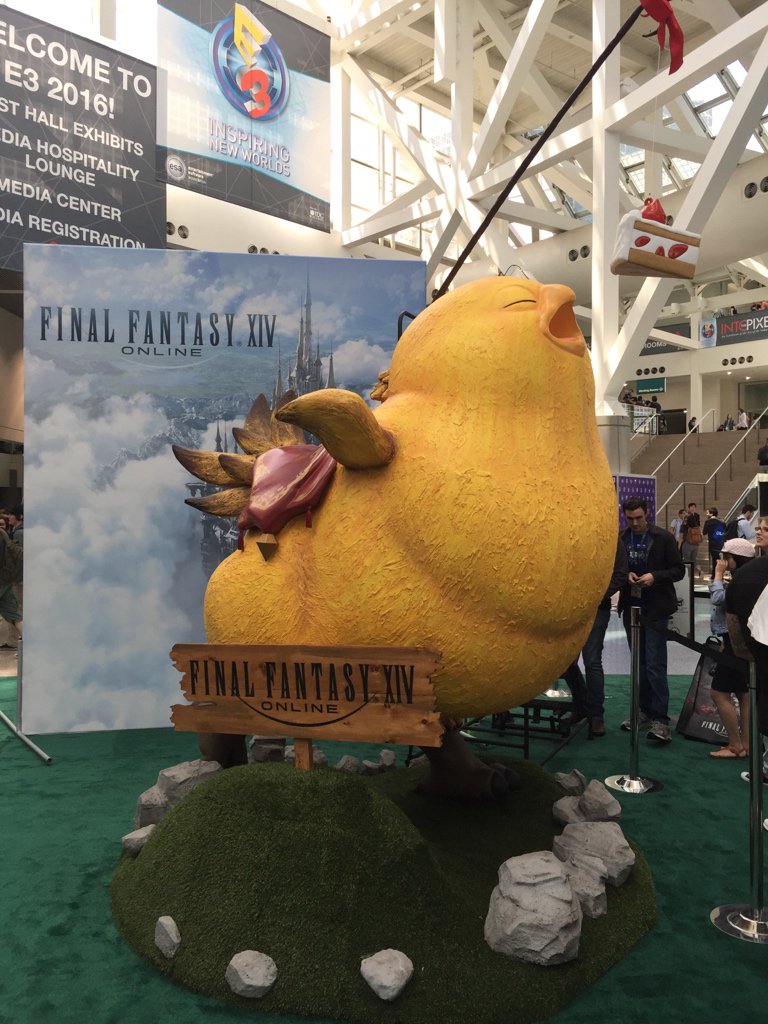
This year marked several significant changes for the Electronic Entertainment Expo (E3). The most obvious is that Activision Blizzard and Electronic Arts both chose to leave the show floor, just maintaining the usual second-floor conference rooms for meetings. Their games could be found on the show floor in Sony and Microsoft's booths, but the massive presence those two major publishers usually had at E3 was completely gone. EA instead hosted the EA Play events (next door to the convention center, and a simultaneous one in London) where they brought players together with creators and celebrities to play some of their upcoming games.

E3 reported it had 3.6% fewer attendees this year, around 50,000 in all. They staged an event called EA Live in the parking lot next to the convention, giving out 20,000 free tickets. Apparently, though, this was a big disappointment; it was an area about the size of two tennis courts, mostly selling merchandise and barely any games. Fans felt liked they'd been duped; they'd been led to believe this was like E3, and of course it was nothing like being inside the halls. While E3 seems to understand that going direct to consumers is the future, this was not the way to do it.

E3 now has all its major media events streamed, and Twitch has a studio on the show floor with continuous programming during show hours. Essentially, all you get from actually being at the show is the chance to go hands-on with games, and to have in-person meetings. As far as getting time with games, you will have some problems with that unless you are a VIP or a member of the media. The line to play the new Zelda game was reportedly as much as eight hours long... or the entire time the expo floor was open one day.

Business meetings are something that benefits from personal contact, so E3's value in that area isn't going to change. The other reasons for the show – generating media coverage, generating excitement and social media amongst fans – those can and are being done more effectively in other ways. E3's value is dropping, and that's clear by what Activision and EA have done. Essentially, those two companies said "we can take the resources we'd spend on E3 and get a better return spending it elsewhere." Other large companies will probably be making that calculation in the coming years. For smaller companies, E3 is a good place to be because of the sheer volume attention directed to the show, which can spill over onto smaller companies. However, that will be less and less true as larger companies depart – less attention to the show, less attention to smaller companies, less reason for them to appear.

There are also other places to get significant attention. Gamescom, with its 340,000 attendees, is already running a trade show during the same week as Gamescom that attracts almost as many people as E3. Other consumer shows like PAX and San Diego ComicCon and many smaller ones are also packed with consumers. That's not even considering streamers and YouTubers and other ways of connecting with an audience.


I predict E3 will continue to try out new tactics in order to remain relevant, but it will probably continue its decline as both console games and retail sales are no longer the core of the games industry. Moreover, there are better conventions for companies that want to maximize audience influence with consumers. E3 will probably continue to shrink in size and influence, though I think there's a reasonable chance that (at some point) the ESA will decide to make some radical change – possibly a reduction to a more business-oriented conference without the huge exhibit floor. Or the ESA may decide to go large and make it a huge consumer show... but that would definitely have to be at a different venue. I think all options are on the table, and it's hard to predict what might happen beyond the next couple of years where E3 has a contract for the LACC. What, if any, contract E3 signs next will be very telling about how they view the future.

Saturday, June 11, 2016

Create Games For a Brand, Not a Platform

The electronic games industry has been focused on the technical challenge of making games work on a platform since its inception. Sure, there'd be an idea for what the game could be -- and then a seemingly endless struggle to bend the hardware to make it deliver your vision. Most of the industry's resources (in time and money) went to overcome the technical challenges in just making games work for each successive platform -- early consoles, early PCs, the NES, the new wave of consoles, more advanced PCs (now with graphics cards!), the Internet (and if you don't think dealing with multiplayer games was challenging from the start... you weren't there), mobile games on smartphones and tablets, and now the latest versions of consoles and PCs (which have become more closely aligned, thankfully) and the emerging VR platforms (mobile, console, and PC based).

Fortunately the tools to create games have advanced even faster than the hardware. There are now multiple choices for excellent tools like Unity, Unreal Engine 4, and many more services that take care of handling servers, payments, and all manner of fiddly pieces of software that developers used to have to write themselves. Or spend endless hours debugging platform makers' tools and early dev systems.

Now, unless you're pushing the hardware limits of a particular platform, more resource can be spent on design than was formerly the case. Heck, you don't even have to chase the best possible resolution for your artwork -- stylized art can be easier to produce and look very nice. Even a style as basic as Minecraft works just fine, thank you -- 100 million copies says artwork is not necessarily the only reason people will buy a game.

Now VR is sucking up a lot of time and energy among developers trying to figure out how to build great VR titles while the hardware is still in flux, and the tools are still being refined. Profits are years away, in all likelihood. Does that mean we shouldn't build VR titles? No, the effort has value in many ways -- and at some point VR will become a market where a developer can make a profit, and those who have labored in the trenches are going to be more likely to reap the early benefits of that.

Still, game developers should realize that the platform is not the most important thing any more -- your brand is. Game players are less platform-fanatic than they used to be, and with the incredible expansion of the game-playing audience through mobile devices all the most dedicated game players have at least two game-playing platforms: Their console or PC and their smartphone. Many have multiple game-playing devices. Do they only play games on one device. Nope, for the most part, they play on the device that makes the most sense at the moment. Hearthstone may be better on a PC, but when you're away from your PC it plays just fine on your phone.

The larger audience of game players cares more about playing their game than on what device it's on. Play Candy Crush on your phone while you're on the train, on your PC at work (during breaks, I hope!). Games should try to be on the platform where their players are likely to be found.

Besides, profits come from games that last for years -- and those are brands. Look at Call of Duty, for instance -- does it matter what console or PC you find it on? Not so much as the brand name does. Sure some game brands are tied to a platform, like League of Legends. But many of the games that earn a billion dollars or more a year are found on mobile -- which means, at minimum, Android and iOS, and probably a special version for the iPad, too. Most top console games these days are found on the PS4 and the Xbox One and on PC as well. Most of those top console brands also have mobile titles linked to the brand, even though the gameplay may be completely different. Heck, Fallout 4 had a top mobile title for months simply on the strength of its brand being applied to the smartphone game.

So, while you may spend a lot of time getting your game to work on given platform, if you want to make money in the long term with that effort you should be thinking about how you can extend that brand to as many platforms as you can, assuming it's successful on the first platform. Don't be thinking "I make (platform X) games;" instead be thinking "I make (specific genre) games" and try to figure out how you can get those games in front of all the players who'd be interested.

Brand first, platform second. That's how you should think about building and keeping an audience over time, which is ultimately how you make money with games.