Seems like there's some data to suggest that, shockingly, raising prices results in lower sales. Who would have ever thought?
It's amazing to me that music and book publishers are apparently making pricing decisions based on gut feelings rather than experimenting, generating sales data for different price points, and using math. I guess they haven't realized that (unlike hard goods) they don't have to worry about the cost of inventory, which means they have more freedom in pricing. Look, if a book cost you $10 to print, and you made thousands of them and they're sitting in boxes in your warehouse, you have to price the book at well more than $10 apiece (perhaps $20 or $30) to make any money. (After all, you did spend some money on editorial, and perhaps even plan on paying the author something.) The converse is, if you don't pay anything for inventory, you could price the book at $30 just like the physical book... and maybe sell 10 digital copies. Perhaps you'd find if you priced the digital book at $10 you'd sell 100 copies... with no change in your upfront costs (transaction costs would be a little different, and the author's royalty would be different, I hope). And what if you found that at $5 you sold 1000 copies? Any sane person would want to make the most money, which would mean pricing the book at $5. (Unless they really hated to see an author make more money, even if it meant they were also making money.)
So watching music publishers trying to raise download prices on iTunes, and book publishers scrambling to strongarm Amazon so they can charge higher prices for e-books, strikes me as insane. I agree Amazon's restrictions are draconian... but I'd like to see a bigger cut for authors and publishers, real freedom in file formats, and publishers competing to sell their books for lower prices (especially older titles who have long since stopped generating significant revenue).
Thursday, February 18, 2010


Thursday, February 11, 2010
Reaching Customers
Paradoxically, reaching customers is both harder and easier than ever before. Back in the Late Stone Age (as my sons would refer to it), prior to the Internet's rise as premier marketing channel, there weren't a whole lot of options for reaching your customers (or potential customers). For games, the action was in magazine advertising. You found the right magazines, put together an ad campaign, bought some space and hoped you'd get some results. Usually, unless you had some sort of direct mail ordering in your ad, you'd never really know how successful the ad was at reaching customers and (more importantly) getting them to buy your products. Aside from magazines, you might have some success with mailings, retail store advertising, or convention appearances, but they all paled next to the power and reach of a good magazine advertising campaign.
Here in the future, while we still wait for our flying cars, magazine advertising is now merely one way to reach customers... and it looks like a pale shadow of its former self. Now we have social network marketing, Twitter, web pages, email campaigns and newsletters, banner advertising, search engine optimization (SEO), paid search ads, SMS codes for mobile phones, in-game advertising... it's a vast array of choices. Unfortunately, it's not easy to sort through them, learn the technology, and determine the best route for your particular title.
A really small publisher (which, in my admittedly biased view, I will define here as one who does not have a full-time marketing employee) has a few choices about how to approach this. One would be picking some marketing tool and throwing some money or effort into it and see if you get results. Another would be learning more about at least one of those marketing tools, and then trying it out (or deciding it isn't for you). Another would be hiring some expertise; get a marketing consultant to advise you on the best course.
Here's the bottom line: If you don't want to spend your time learning about marketing to some extent, you will either be spending money on marketing randomly (or not spending at all), or you need to spend some money on a marketing person to help you make some choices. Some careful experimenting with your marketing dollars might show you a big return; it's certainly worth seeing if the spending you already budget for can be made more productive. Once you find something that works, do more of it.
Here in the future, while we still wait for our flying cars, magazine advertising is now merely one way to reach customers... and it looks like a pale shadow of its former self. Now we have social network marketing, Twitter, web pages, email campaigns and newsletters, banner advertising, search engine optimization (SEO), paid search ads, SMS codes for mobile phones, in-game advertising... it's a vast array of choices. Unfortunately, it's not easy to sort through them, learn the technology, and determine the best route for your particular title.
A really small publisher (which, in my admittedly biased view, I will define here as one who does not have a full-time marketing employee) has a few choices about how to approach this. One would be picking some marketing tool and throwing some money or effort into it and see if you get results. Another would be learning more about at least one of those marketing tools, and then trying it out (or deciding it isn't for you). Another would be hiring some expertise; get a marketing consultant to advise you on the best course.
Here's the bottom line: If you don't want to spend your time learning about marketing to some extent, you will either be spending money on marketing randomly (or not spending at all), or you need to spend some money on a marketing person to help you make some choices. Some careful experimenting with your marketing dollars might show you a big return; it's certainly worth seeing if the spending you already budget for can be made more productive. Once you find something that works, do more of it.
Wednesday, February 10, 2010
A Classic Positioning
Another fine example example of "if you can't fix it, feature it": Electronic Arts had a conference call with analysts and had this to say about their sales picture, which has not looked good for years: EA is the #1 packaged goods publisher in the US and Europe.
OK, I get they're trying to put a happy face on yet another quarter of disappointing numbers, and the fact that they're reducing their forecasts for the coming year... but, come on! This just looks pretty lame. OK, I get that they feel a little bit miffed that Activision has passed them up as the number 1 publisher in terms of total revenue, so they invented a new metric that they could be #1 in: Packaged goods in the US and Europe. Ah, yes, the increasingly less relevant packaged goods market.
Maybe if they spent less time trying to invent good spin on their predicament, and more time actually improving their business model, I'd have more sympathy. But at least if you're gonna spin, try to do a good job of it. This was not a good spin job; it just highlights their weaknesses.
OK, I get they're trying to put a happy face on yet another quarter of disappointing numbers, and the fact that they're reducing their forecasts for the coming year... but, come on! This just looks pretty lame. OK, I get that they feel a little bit miffed that Activision has passed them up as the number 1 publisher in terms of total revenue, so they invented a new metric that they could be #1 in: Packaged goods in the US and Europe. Ah, yes, the increasingly less relevant packaged goods market.
Maybe if they spent less time trying to invent good spin on their predicament, and more time actually improving their business model, I'd have more sympathy. But at least if you're gonna spin, try to do a good job of it. This was not a good spin job; it just highlights their weaknesses.
Tuesday, February 9, 2010
If You Can't Fix It, Feature It
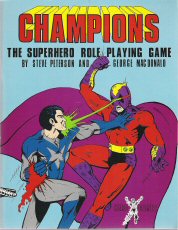
I'll use as an example something from the ancient history of the company I co-founded, Hero Games.
When we couldn't afford to reprint our boxed Champions RPG (because the box cost too much in addition to all of the booklets inside), we switched to a perfect-bound book instead. This meant moving away from the standard RPG of the time, which was a box with separately bound rules, adventures, a map, and dice. The move improved our profit margins, but how would the fans respond? We positioned this as "all the materials in one convenient book" and emphasized the feature of compactness and ease of use. It worked; the perfect bound version of the game sold well, and over the next few years it became the industry standard for RPG rules.
An all because we couldn't fix it... so we featured it.
Friday, February 5, 2010
Xbox Live Arcade Sales Figures
The kimono has been opened, at least a little. Some Xbox Live Arcade figures have been released, and the estimate shows that Xbox Live Arcade raked in over $100 million dollars last year. Not bad for digital downloads... that's some healthy money, especially when you consider there's no inventory, no manufacturing, no shipping costs. Little wonder every publisher and developer is hoping to push digital downloads higher and faster.
Tuesday, February 2, 2010
The Con Game
Specialty conventions can be a cost-effective way to reach certain demographics. There are many types of specialty conventions, from Star Trek to comics, anime to science fiction, boardgaming to electronic gaming... and many with elements of more than one type. (And don't ignore business-oriented , technical, medical, or scientific conventions if your product has some connection to them; being an unusual product is a big plus when the demographic of the convention-goer is predisposed to be interested in that sort of thing.) How do you market your product at such a convention? Here's some ideas:
But before you begin, make sure you adequately estimate the time and the cost involved with your plan, and how many more products you'd have to sell to make it worthwhile. Make sure you can track the results, and afterward see how close your estimates came. To me, the ideal show is one where you can go and have fun, sell enough product to cover all your costs and make a profit, and generate a lot of positive publicity, good consumer buzz, and make valuable industry contacts and business deals.
- The Booth. Most larger conventions have some sort of exhibit floor, and you can buy yourself a presence there. This can run into some serious dollars, though, as well as requiring that you have the booth staffed at all times, and have put together a good booth presentation. You may recoup some of the expenses if you can sell product there, but don't count on breaking even unless you have experience with this. If you haven't done this before, go to some shows first and figure out what booths you like (and what you don't) and try to emulate a successful, low-cost presence.
- The Demo. Many shows have an area where you can demonstrate your game, and sometimes for free. Have some signage, some good game demo'ers, and a way to convert people who tried it into customers ("If you go into the dealer room and buy a copy, bring it back and I'll give you a free widget!"). Again, if you haven't done this before, go to a few shows and see what makes an effective demo.
- The Sell Sheet. Colorful fliers presenting your product can usually be put out at such shows on tables reserved for information. Often you can put them up around the show, but you need to make sure this is OK before you do it (your flier should make it easy to track you down, otherwise it isn't doing a very good job marketing... which means if you post it illegally they can find you). Best bet: Put in some sort of show special, directing people to your website (or show booth) with a special redemption code for an extra of some sort.
- The Speaker. If you've got some personal brand awareness in the industry, see about giving a seminar or joining a panel. Work in your new product as elegantly as you can, along with a web address. But don't sound like an infomercial huckster.
- The Event. Stage some sort of event at the show in order to generate interest in your product, publicity, and sales. What sort of event? Something creative connected with the game's content... At least a couple of people in costume handing out sell sheets. Better, have them stage a scene that gets people talking ("What the heck was that?") and hopefully putting something on YouTube. Do something dramatic; perhaps connect it to charitable giving. Just make sure you don't do something so dramatic it could cause calls to the police!
But before you begin, make sure you adequately estimate the time and the cost involved with your plan, and how many more products you'd have to sell to make it worthwhile. Make sure you can track the results, and afterward see how close your estimates came. To me, the ideal show is one where you can go and have fun, sell enough product to cover all your costs and make a profit, and generate a lot of positive publicity, good consumer buzz, and make valuable industry contacts and business deals.
Monday, February 1, 2010
Cover Art, Marketing Style
Cover art is a key feature in marketing books, games sold in stores, and even some games sold as digital downloads (although often much altered in this form, being reduced to an icon for instance). Getting "good" cover art can be a major expense and difficulty for a small publisher. Particularly when the definition of "good" can be so different for so many people.
Over the years, I've gone through a few definitions of "good" as it pertains to cover art for products. At first I thought "good" cover art was art I liked. Simple enough, but really not relevant. After all, the point of putting a product on the market (usually) is to make money, and whether or not I like the artwork has little if anything to do with how many copies of a game I can sell. A more useful definition of "good" would be functional: "Good" artwork reflects the nature of the product, helps make the title easily readable, makes the genre obvious, and so on. Better, but still not quite there. The definition I now use is this: "Good" cover art sells the most product; ideally, with the highest profit. So the ideal cover art would cost nothing to create or use, while selling the most copies. Really bad cover art would be a very expensive piece of art that actually repels customers and reduces sales to a minimum.
Looking at cover art functionally in this manner gives you a whole different approach to getting a cover put together. Poor coloring can ruin a good drawing, especially if the coloring makes it hard to read the product's title. High-quality art from a top illustrator that costs thousands of dollars is probably not optimal, especially if your marketing budget is hardly more than that (or even less). Look for a second-use right to an existing piece of art from a top illustrator; such pieces can often be had for a few hundred dollars, and you know exactly what you're going to get in advance, and you don't have to wait. Or ask a graphic artist for a dramatic treatment of some element important in the game (such as a gun); look to book covers for some interesting ideas with very little actual art, but dramatic and effective use of colors and graphic elements (and the title usually the most prominent of those, or perhaps the author's name).
Just don't make the mistake of thinking a nice piece of art is necessarily a "good" cover; your object is to sell games, not be a patron of the arts.
Over the years, I've gone through a few definitions of "good" as it pertains to cover art for products. At first I thought "good" cover art was art I liked. Simple enough, but really not relevant. After all, the point of putting a product on the market (usually) is to make money, and whether or not I like the artwork has little if anything to do with how many copies of a game I can sell. A more useful definition of "good" would be functional: "Good" artwork reflects the nature of the product, helps make the title easily readable, makes the genre obvious, and so on. Better, but still not quite there. The definition I now use is this: "Good" cover art sells the most product; ideally, with the highest profit. So the ideal cover art would cost nothing to create or use, while selling the most copies. Really bad cover art would be a very expensive piece of art that actually repels customers and reduces sales to a minimum.
Looking at cover art functionally in this manner gives you a whole different approach to getting a cover put together. Poor coloring can ruin a good drawing, especially if the coloring makes it hard to read the product's title. High-quality art from a top illustrator that costs thousands of dollars is probably not optimal, especially if your marketing budget is hardly more than that (or even less). Look for a second-use right to an existing piece of art from a top illustrator; such pieces can often be had for a few hundred dollars, and you know exactly what you're going to get in advance, and you don't have to wait. Or ask a graphic artist for a dramatic treatment of some element important in the game (such as a gun); look to book covers for some interesting ideas with very little actual art, but dramatic and effective use of colors and graphic elements (and the title usually the most prominent of those, or perhaps the author's name).
Just don't make the mistake of thinking a nice piece of art is necessarily a "good" cover; your object is to sell games, not be a patron of the arts.
Subscribe to:
Posts (Atom)

 Posts
Posts


